A Visit to the Magaguadavic Lake Watershed
September 1, 2026
Written by Mackenzie Warman, Project Coordinator
Reflections from the Joslin Brook wetlands
We headed into the field to explore the wetlands surrounding Joslin Brook, a tributary flowing into Magaguadavic Lake in southwestern New Brunswick. Our goals were to identify flora and fauna native to the area, assess site suitability for future wetland programming, explore wetland boundaries, and better understand the wetland classifications present within this portion of the watershed.
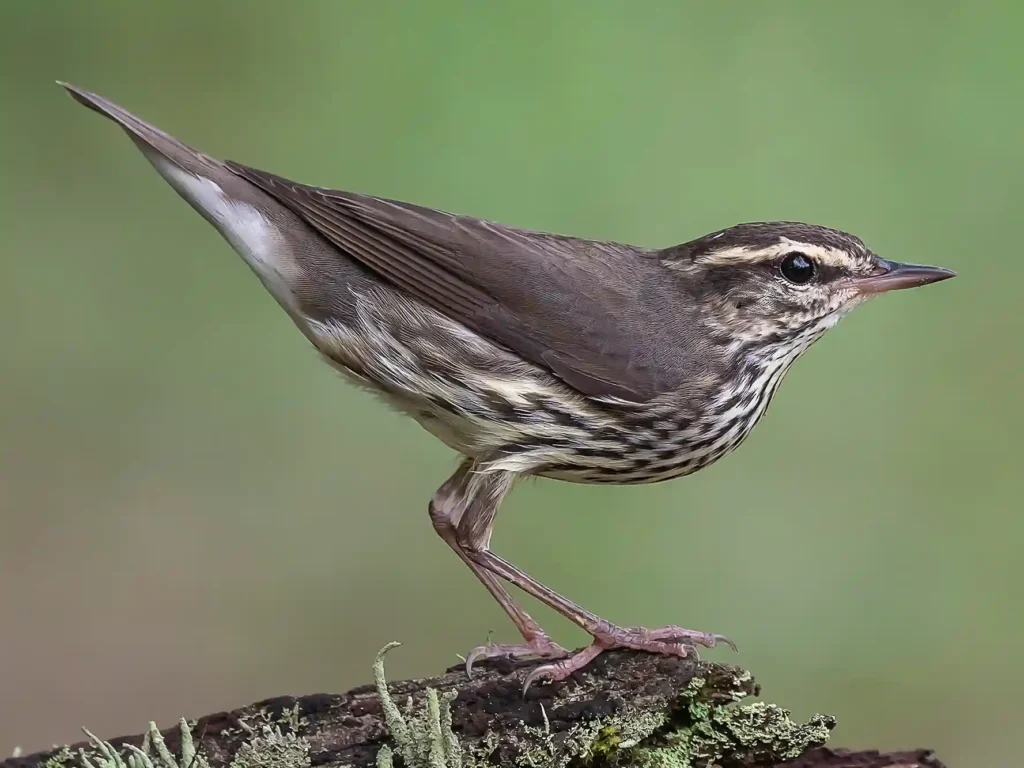
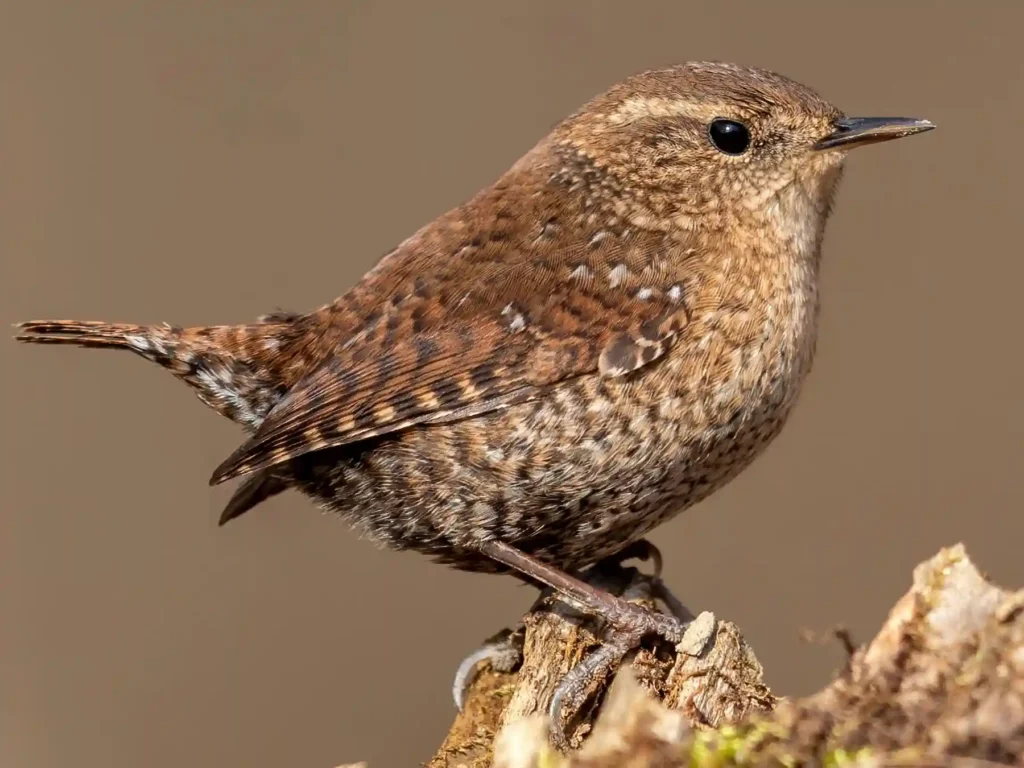
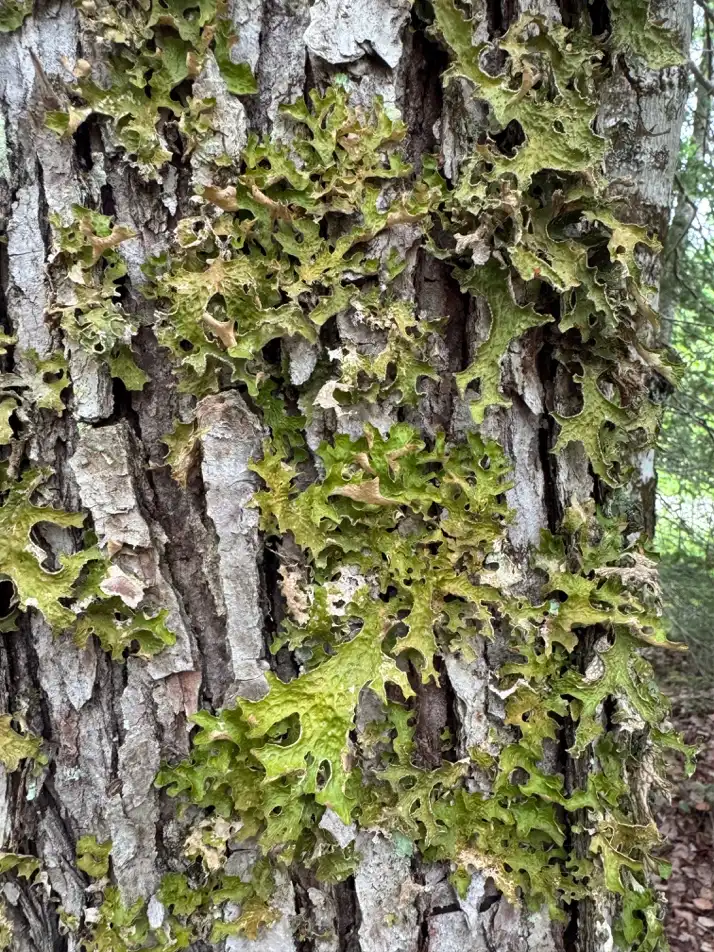
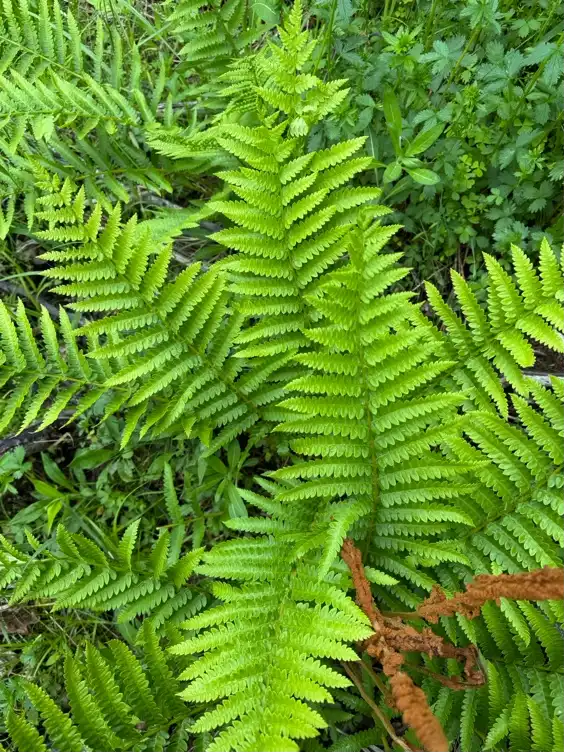
As we moved through the landscape, it quickly became apparent that these wetlands were far more diverse than they first appeared. The area contained both marsh and swamps wetland habitats, each supporting distinct plant and wildlife communities. In the forested wetlands, Sensitive Fern carpeted the understory beneath hardwood trees growing on saturated mineral soils. Mosses and lichens covered tree trunks and fallen logs, while the songs of Winter Wrens and Northern Waterthrushes echoed through the swamp.
We also encountered Tree Lungwort growing on tree trunks and Wild Sarsaparilla along the forest edge Nearby, American Robins busily searched for worms to feed their young.
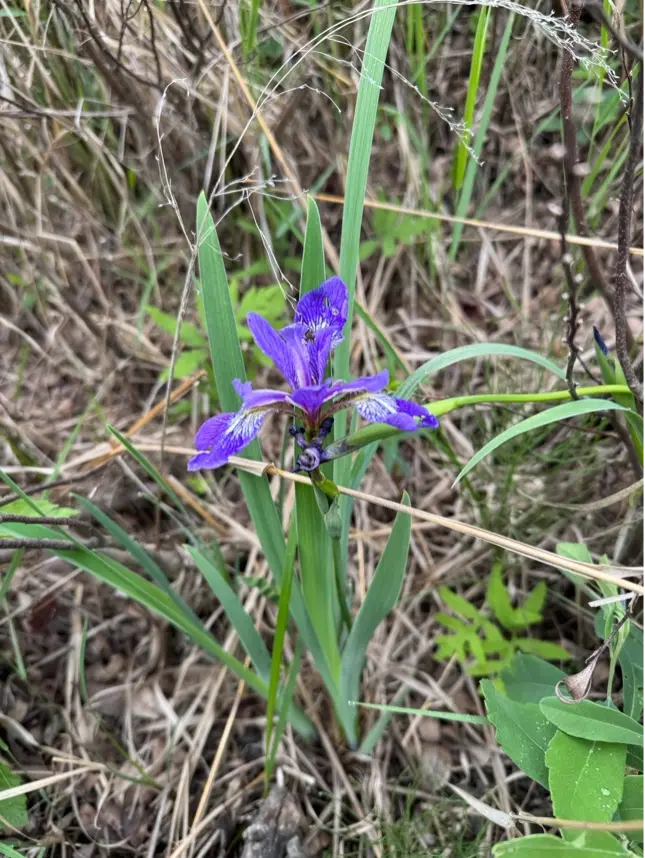
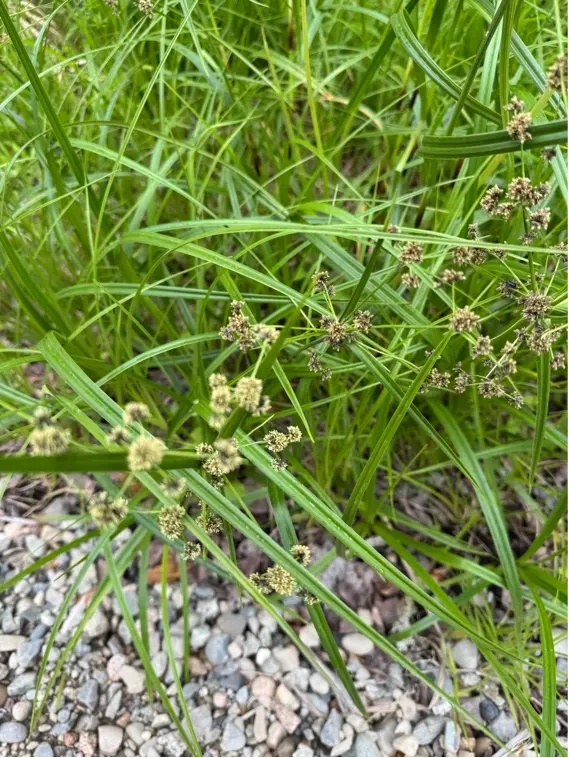
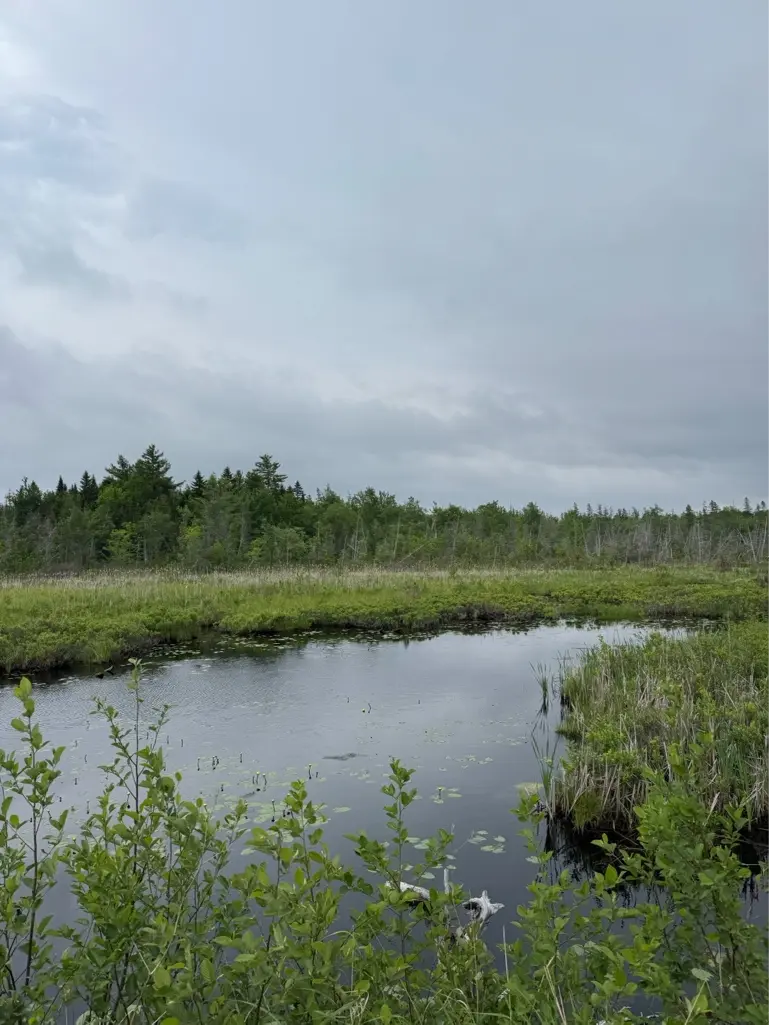
Closer to Joslin Brook, signs of past beaver activity were evident along the brook. Beaver engineering has likely played an important role in shaping the hydrology and habitat diversity of this wetland complex over time. Pulling on our waders, we stepped into the brook to take a closer look. Water striders skimmed across the water’s surface while aquatic vegetation lined the edges of the channel.
As the wetland opened into marsh habitat, we observed Yellow Pond-lilies floating among emergent vegetation. Blue Flag Iris (LEFT) added bright splashes of colour along the shoreline, as well as Panicled Bulrush (MIDDLE) and Cinnamon Fern (RIGHT). Each species offered clues about the health, moisture conditions, and ecological character of the site.
One of the primary goals of this visit was to begin exploring the potential for a site-specific wetland education guide centered on the Joslin Brook wetland complex. While many educational resources discuss wetlands broadly, there is tremendous value in helping participants learn directly from the species, habitats, and ecological processes found within their own watershed. Throughout the day, we documented plant communities, wildlife observations, wetland boundaries, and habitat features that could form the foundation of future educational programming.
The diversity of habitats observed during our visit highlighted numerous opportunities for hands-on learning. A wetland plant identification walk could introduce participants to species such as Blue Flag Iris, Sensitive Fern, Cinnamon Fern, Wild Sarsaparilla, Tree Lungwort, and Panicled Bulrush. Bird-focused programming could encourage participants to identify species by sight and sound, listening for birds such as Winter Wren, Northern Waterthrush, Red-winged Blackbird, and American Robin. The site also offers excellent opportunities to explore wetland delineation, where participants can learn to identify hydric soils, wetland vegetation indicators, and evidence of seasonal flooding.
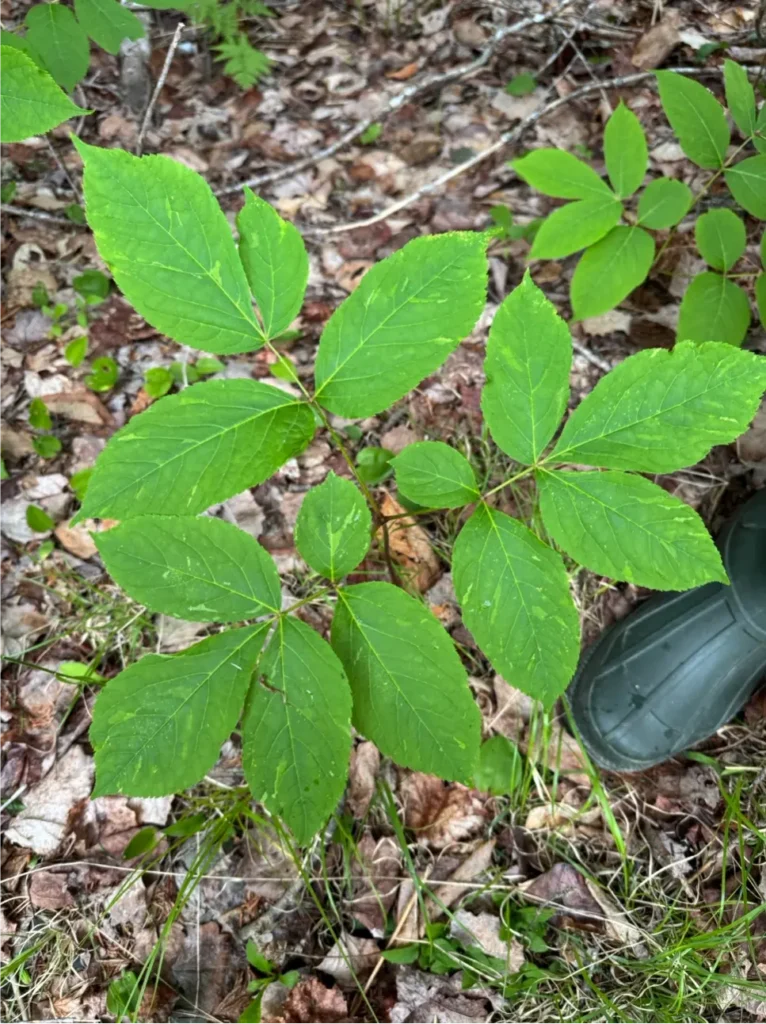
Wild Sarsaparilla, will produce small black-blue berries that will likely feed songbirds and mammals.
Beyond species identification, the wetlands surrounding Joslin Brook tell stories about ecological relationships and natural processes. Beaver activity throughout the area provides an opportunity to discuss how wildlife can shape entire landscapes. Marshes and shallow-water habitats offer potential for aquatic invertebrate surveys, while lichens growing throughout the forested wetlands can be used to explore forest health and environmental indicators. The natural transition from upland forest to swamp and marsh creates an ideal setting for habitat transect activities, allowing participants to observe how plant communities, soils, and hydrology change across the landscape.
Beyond the plants and wildlife, the landscape also holds a rich human history. During our visit, we learned about Camp Magaguadavic, established in 1946 by the Capital Y’s Men’s Club following the Second World War. The camp was originally created as a place for children, including those whose families had been affected by the war, to experience nature, recreation, and community. Generations of youth have since developed connections to the lake and surrounding forests, creating a lasting relationship between people and the watershed.
Standing among the wetlands, it was easy to see why this area has inspired connection for so many years. The Joslin Brook wetlands support wildlife, help maintain water quality, store floodwaters, and contribute to the overall health of the Magaguadavic Lake watershed. At the same time, they provide opportunities for learning, exploration, and stewardship.
This visit reminded us that wetlands are not isolated patches on a map. They are living systems connected by water, wildlife, and people.
As we continue developing future wetland programming, we hope to create a site-specific guide that reflects the unique ecological character of the Joslin Brook wetlands while encouraging a stronger connection between community members and the natural systems that support the Magaguadavic Lake watershed. By combining ecological observations, local history, and place-based learning, this site has the potential to become an outdoor classroom where participants can develop a deeper appreciation for wetlands and the important role they play in supporting both people and wildlife.
The Joslin Brook wetlands offer an excellent example of how local places can foster curiosity, learning, stewardship, and a lasting connection to the natural world.
Want to collaborate or be part of our work?
USNN’s work is built through partnerships, shared learning, and people who care deeply about land, community, and conservation. If you’re an educator, researcher, community group, student, or organization looking to collaborate, team up, or explore ways to work together, we’d love to hear from you. We’re always open to co-developing programs, supporting land-based learning, contributing ecological expertise, and connecting youth and communities with meaningful conservation experiences.
Reach out via our contact page or email info@usnn.ca to start a conversation. Together, we can strengthen conservation efforts, support the next generation of land stewards, and care for the places that connect us.

Posted by:
Drew Praticante
Newsletter
Latest News

You might also like