Nature Appreciation: Field Learning Days at Mactaquac Provincial Park
March 10, 2026
Written by Sama AlMaarofi, Founder & Executive Director
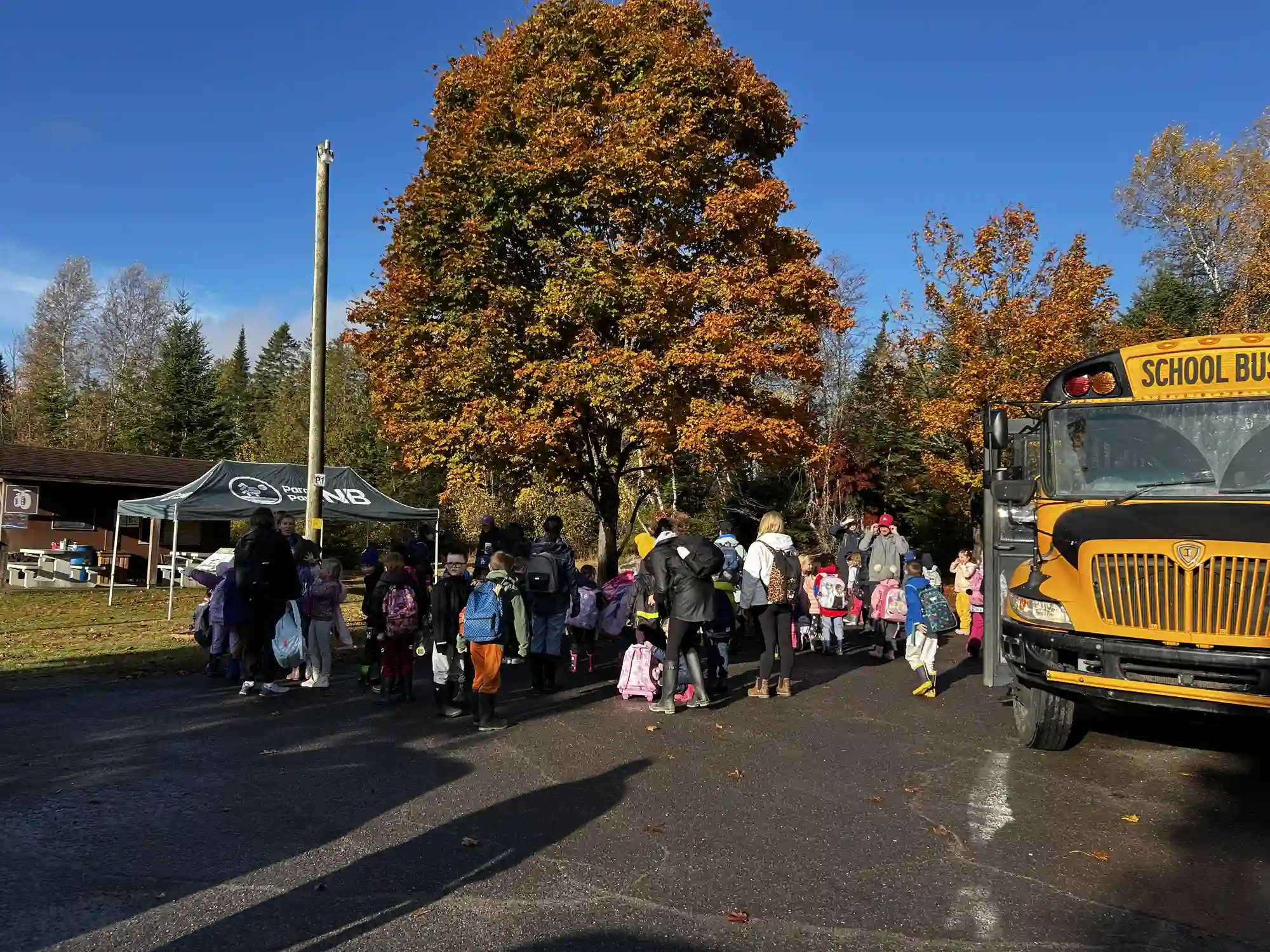
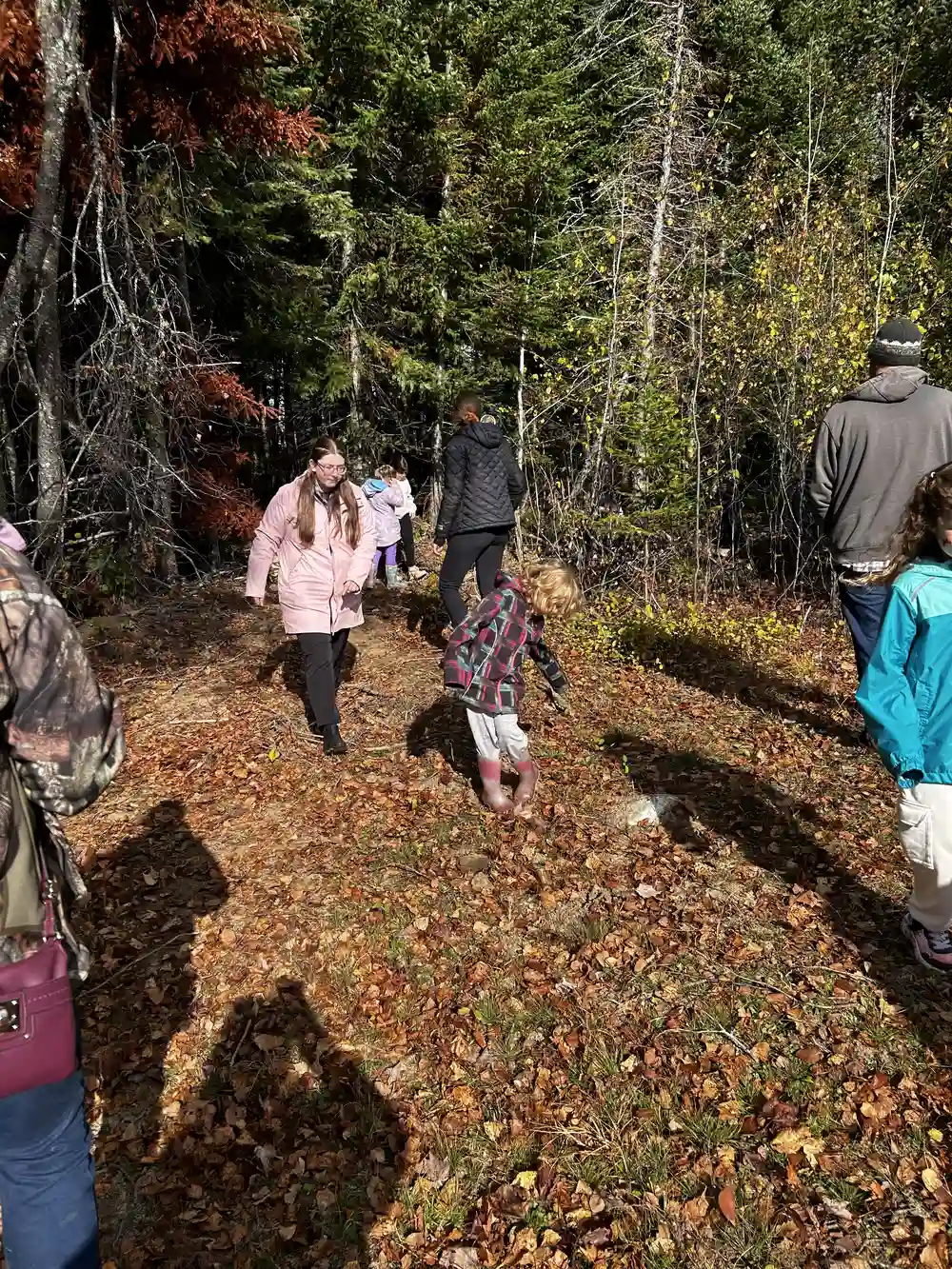
Dates: October 14, 2025 and October 20, 2025
Participation: 2 schools | 10 classes (K–G4) | ~100 students | ~40 teachers/staff & supporting parents
In October 2025, the forest at Mactaquac Provincial Park didn’t just host a field trip; it hosted a full-on learning adventure.
The leaves were glowing in fall colours, the air felt crisp and fresh, and the trails were filled with the kind of energy you only get when children realize nature isn’t a “place to visit”… it’s a place to discover. Mactaquac’s woodlands and trail landscapes gave us the perfect outdoor classroom, rich, alive, and full of surprises around every bend.
These two special days were part of Nature Through Our Senses, a sensory-based, play- and inquiry-driven environmental learning program that helps young learners connect with nature through sight, sound, smell, and touch, and strengthens early stewardship values through respect, observation, and guardianship of the land.
What the students experienced
We began the way every good adventure starts with a friendly welcome.
I introduced USNN, who we are, what we do, and how we learn when nature becomes the teacher. And then, before we even stepped into deeper exploration, we practiced something that instantly changed the whole group’s dynamic: a simple, fun listening routine. It was playful, quick, and it worked like magic. Suddenly, the kids were tuned in, ready, and proud that they could follow “forest instructions” like real explorers. Later, teachers told me they wanted to use the same approach back in the classroom.
Then I asked a question that always opens hearts: “What’s your favourite way to spend time outside?” Hands flew up. Some kids said running. Some said climbing. Some said picking up leaves. Others said simply being with friends. In that moment, the park didn’t feel like a destination, it felt like their place.
And that’s when the detective work began.
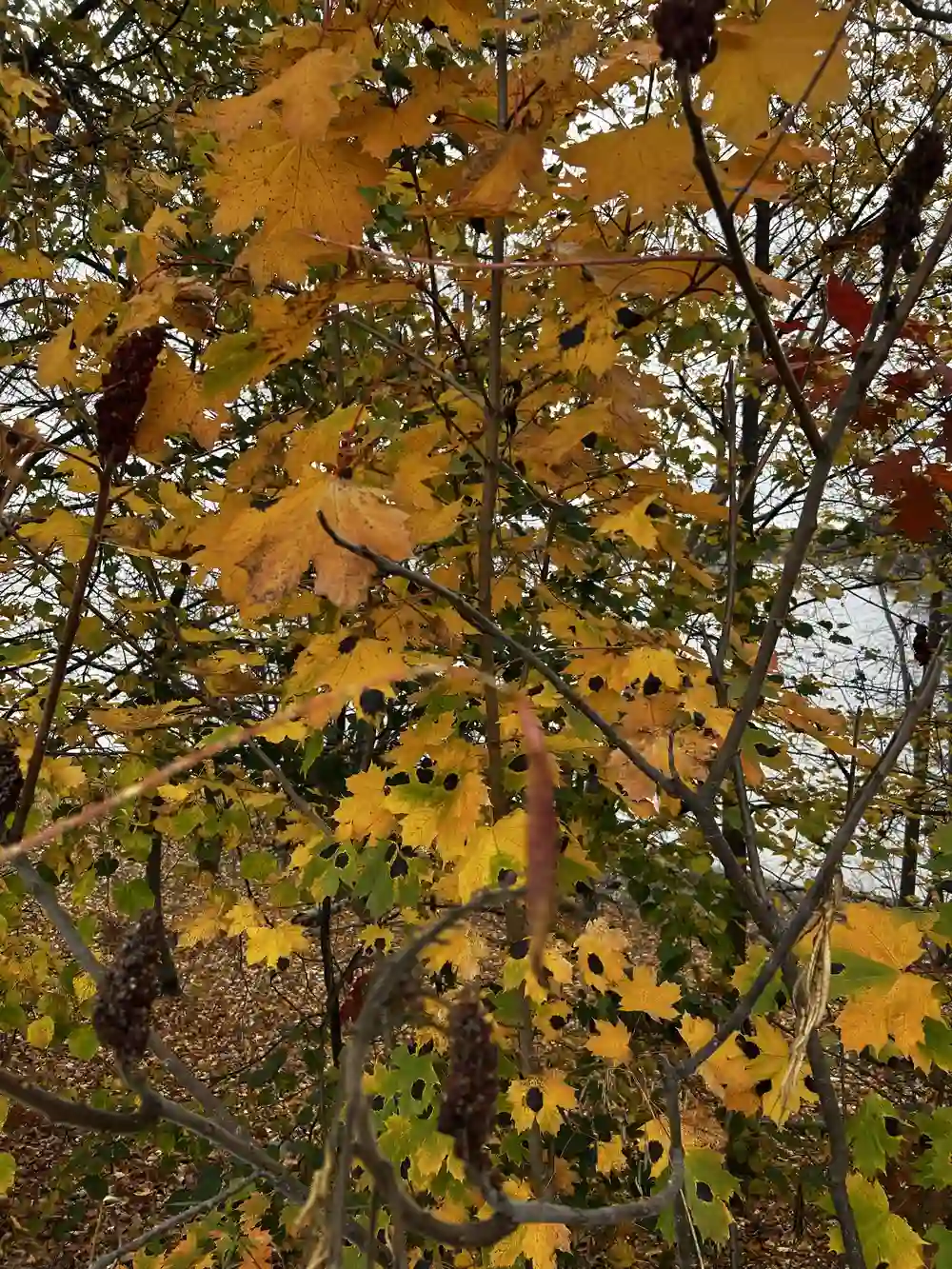
We became tree detectives, comparing leaves, bark textures, shapes, and colours. We looked closely at maples and aspens, noticing the differences the way scientists do, by slowing down and really seeing what’s in front of us. The children were proud of how quickly they could identify patterns: “This bark is rougher,” “That leaf has different edges,” “This one is changing colour faster!”
Then came one of the biggest “wow” discoveries of the day: tar spot fungus on maple leaves, those dark spots that look like nature dotted the leaf with ink. The kids leaned in, curious, and fascinated. We talked about what it is, how to recognize it, and what it might tell us about tree health.
But what happened next was a pure heart.
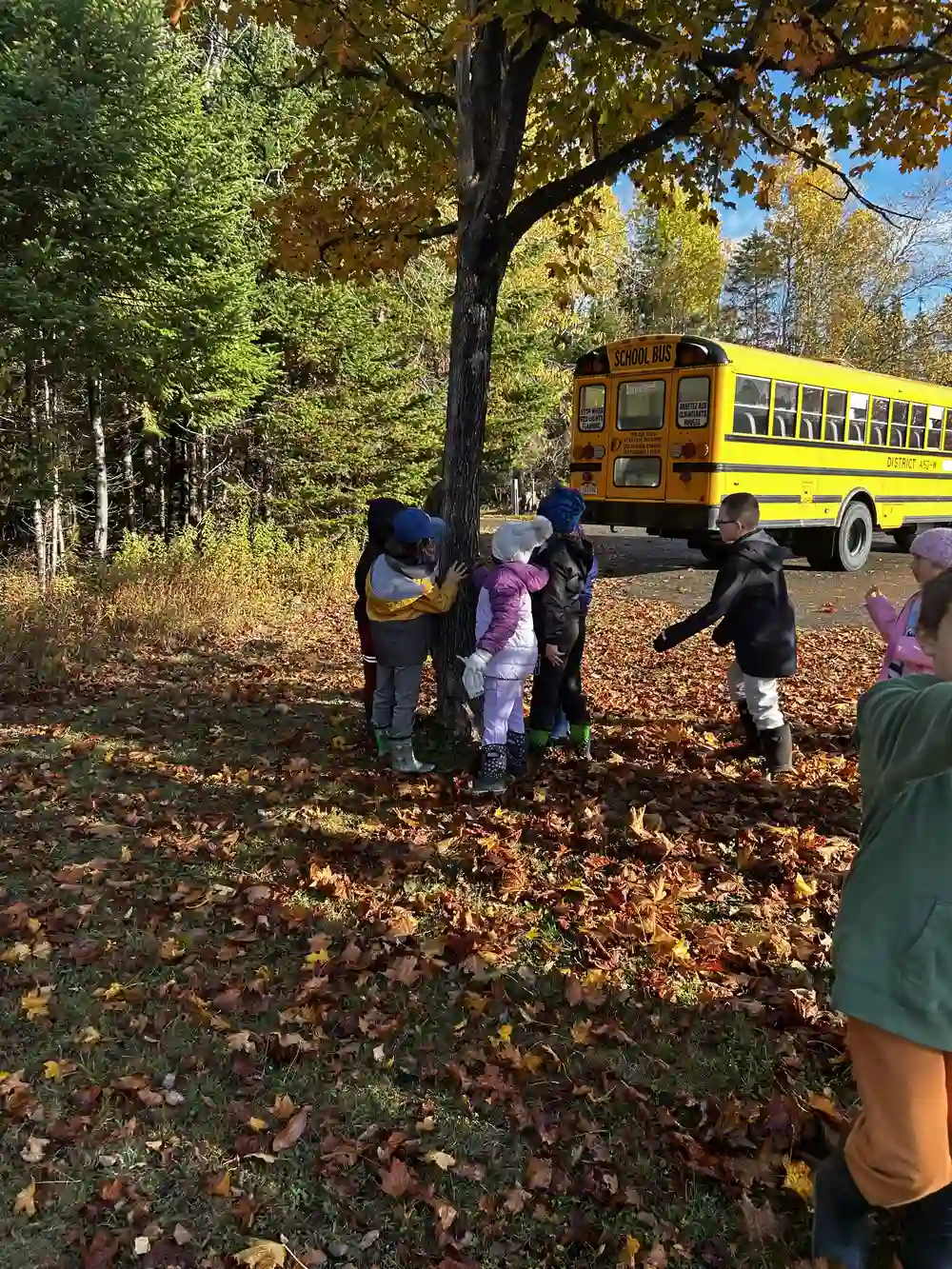
Without being prompted, the kids turned science into kindness. Some of them gently hugged the trees. Others whispered well-wishes. That moment reminded all of us that environmental learning isn’t only about facts, it’s about relationships, empathy, and care.
Then we did something that surprised the teachers and thrilled the students: canopy math in the forest.
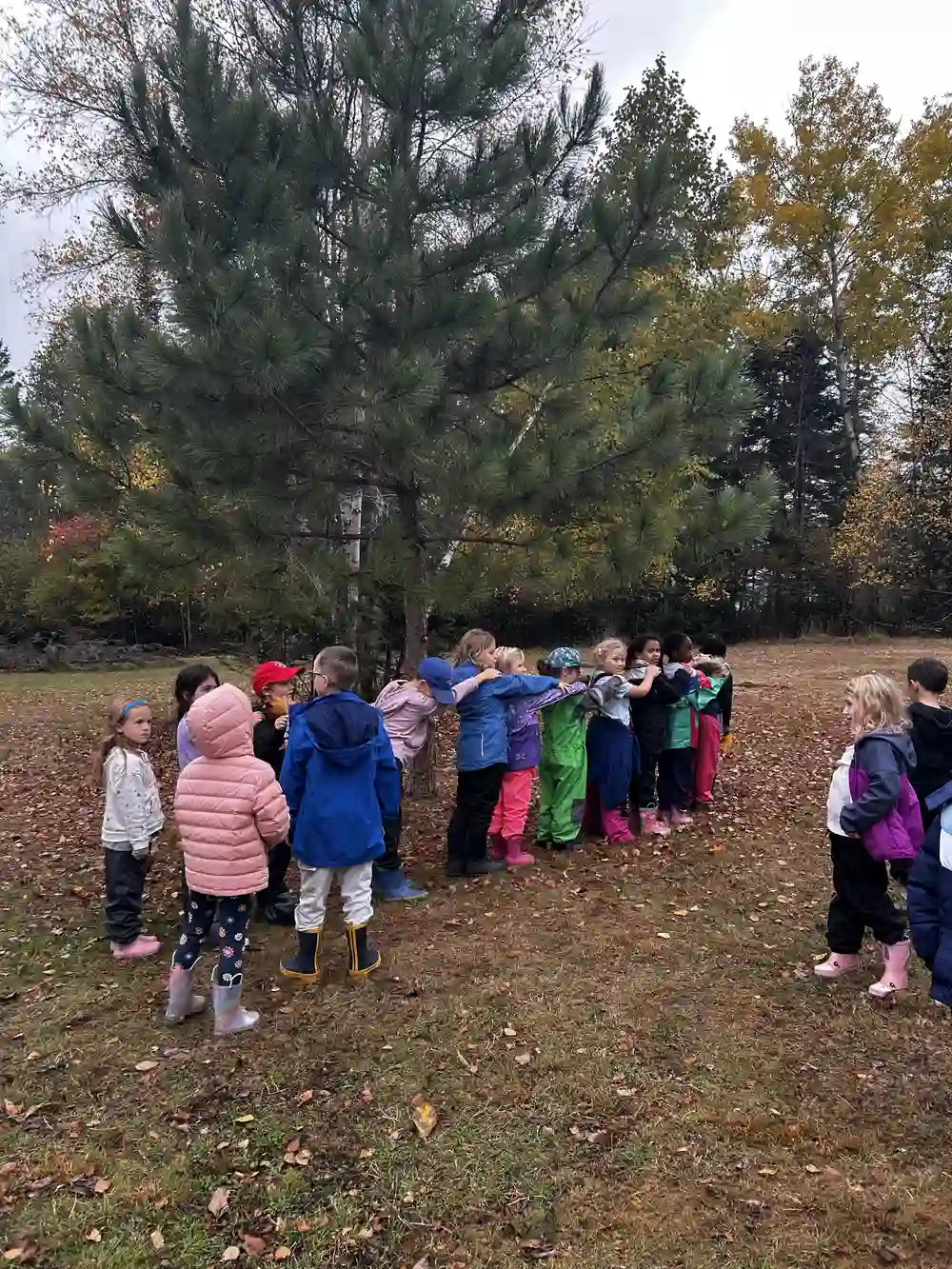
We measured shade and canopy size using a child-line method; students lined up across the ground from one edge of the canopy to the other, and one student counted. When they realized one tree made a bigger “shade roof” than another, their eyes lit up like they’d just solved a mystery.
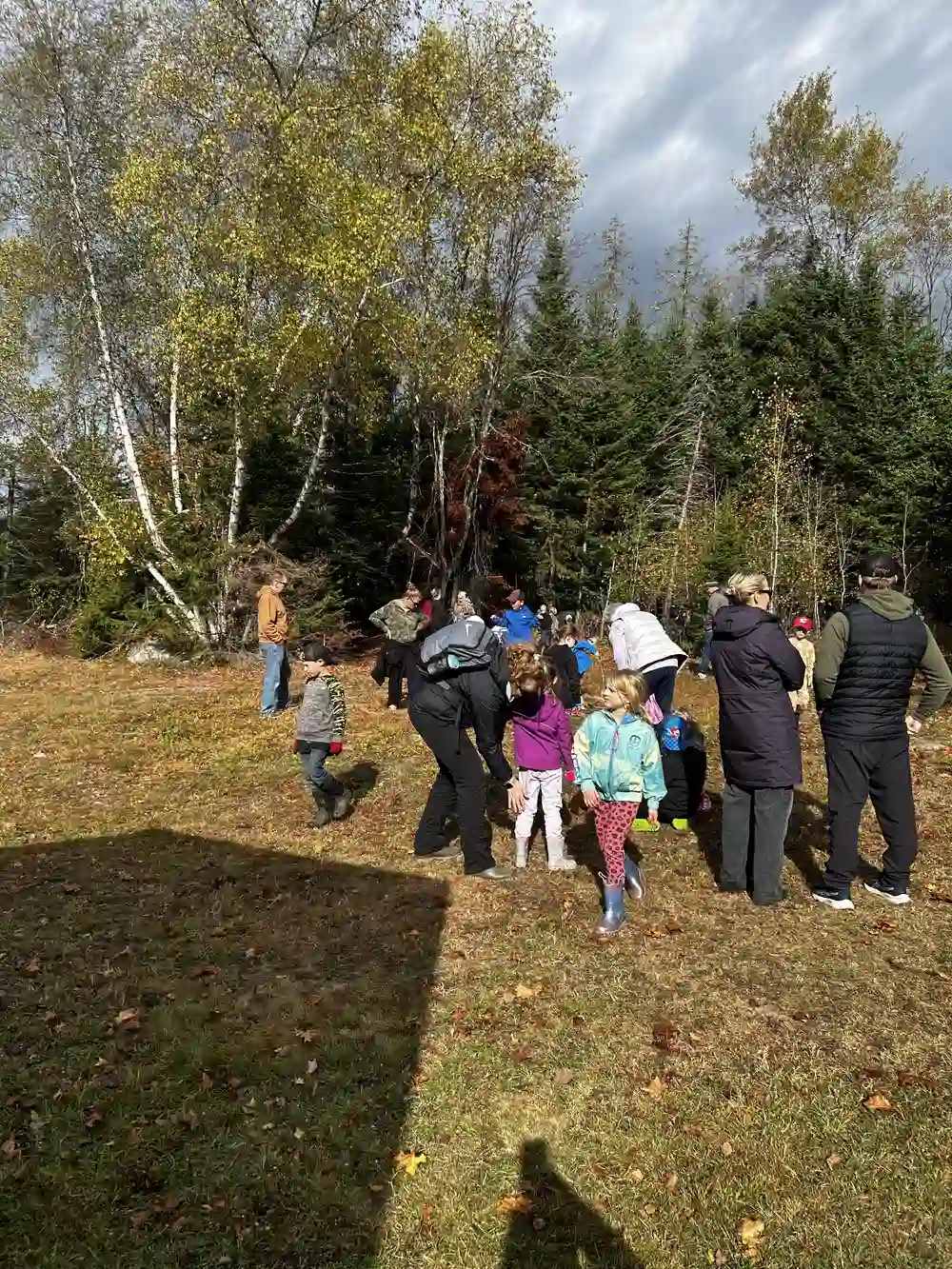
From there, we dropped into a smaller world at our feet, microhabitat exploration. Kids searched around tree bases and leaf litter for insects and tiny wildlife, carefully collecting a few (briefly and gently) to observe. Then we asked:
“Where do you think it lives?”
“What do you think it needs?”
Suddenly, the forest wasn’t just trees, it was homes, neighbourhoods, and relationships.
And because we love giving kids a joyful way to remember what they learned, we created a simple song together. By the end of the session, they were singing it like it was their favourite chorus:
“Tar spot is a black dot, on a maple leaf; it makes it bad, and that’s so sad.”
A moment of Reflection
When I think back to these two days, what stays with me most is the spark, that moment when learning becomes real and children realize, “I can do this.”
I felt so proud watching students stay engaged from activity to activity because everything was hands-on, sensory, and moving at a pace that matched their energy. Their curiosity didn’t fade; it grew.
Mactaquac also made it easy to teach with joy. Every few steps, something new appeared: a leaf pattern, a fungus sign, an insect trail, a perfect canopy to measure. It honestly felt like the park was teaching alongside me, like nature itself was saying, “Look closer. Keep going.”
One of the most meaningful moments for me was hearing the children confidently use new words, bark, fungi, canopy, tar spots, not just repeating them, but using them correctly as part of their own observations. Teachers noticed it too, and I could see that sense of pride in the kids’ faces.
And I loved seeing how naturally we could blend subjects outside. Science and observation were always present, but math appeared too, through measurement, counting, comparison, and real-world reasoning. This kind of learning-through experience is exactly what New Brunswick’s curriculum framework encourages: learning through experience, trial-and-error, and reflection.
What we learned from the challenges (and why it made us better)
Of course, nature always gives you the real version of the day, not the perfect one.
We had rain, and we had moments where attention spans dipped (because they’re young learners, of course they do!). But instead of seeing those problems, we treated them as part of the practice.
The rain invited us to be flexible and creative. We adjusted our teaching style, shifted the flow, and let students experience that nature changes, and we can learn with it, not against it.
And when attention spans got short, we leaned into what works best outdoors: quick micro-activities, movement, call-and-response, and constant invitations to notice something new. Those adjustments didn’t reduce the learning, they protected it.
Let’s bring this joy to more learners
These two Nature Appreciation days reminded us of something powerful… Kids don’t need more screens to learn more, they need more chances to wonder. The learning and joy we experienced at Mactaquac should be felt by many more classes across New Brunswick. Research continues to support what we see in real life: nature-based outdoor learning is linked with measurable benefits for student wellbeing and learning outcomes.
GET IN TOUCH
Learn more about Nature Through Our Senses
If you’re a teacher, school leader, or parent group who wants to bring your students into this kind of outdoor learning experience, we’d love to hear from you!
Reach out via our contact page or email info@usnn.ca to learn more about our program, Nature Through Our Senses. Together, we can help more young people experience nature through sight, sound, smell, and touch — building curiosity, respect for the land, and a lasting connection to the natural world.
Want to collaborate or be part of our work?
USNN’s work is built through partnerships, shared learning, and people who care deeply about land, community, and conservation. If you’re an educator, researcher, community group, student, or organization looking to collaborate, team up, or explore ways to work together, we’d love to hear from you. We’re always open to co-developing programs, supporting land-based learning, contributing ecological expertise, and connecting youth and communities with meaningful conservation experiences.
Reach out via our contact page or email info@usnn.ca to start a conversation. Together, we can strengthen conservation efforts, support the next generation of land stewards, and care for the places that connect us.

Posted by:
Drew Praticante
Newsletter
Latest News