Blueberry Baskets, Black Ash, and the Work of Keeping Culture Alive
March 24, 2026
Written by Sama AlMaarofi, Founder & Executive Director
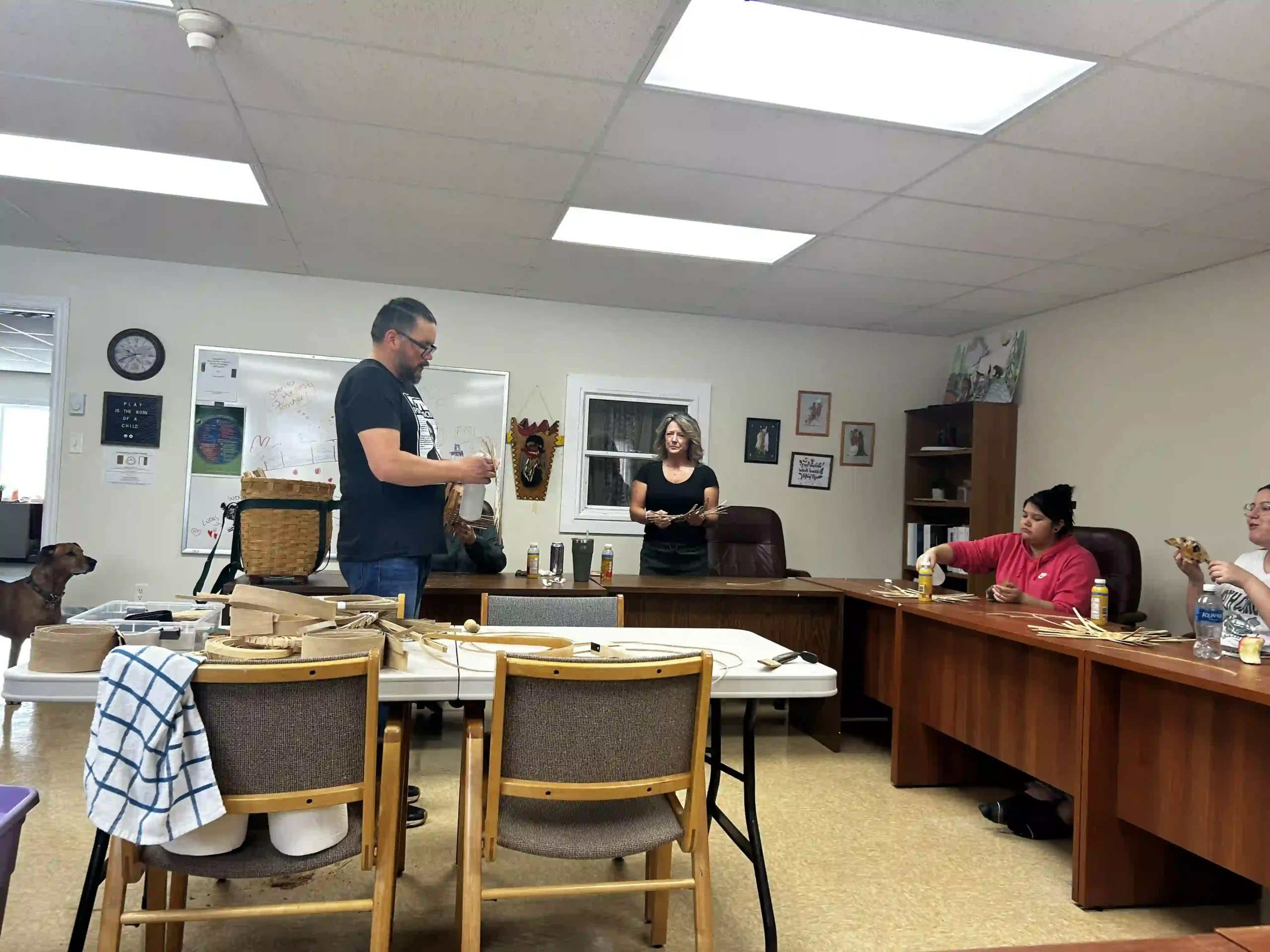
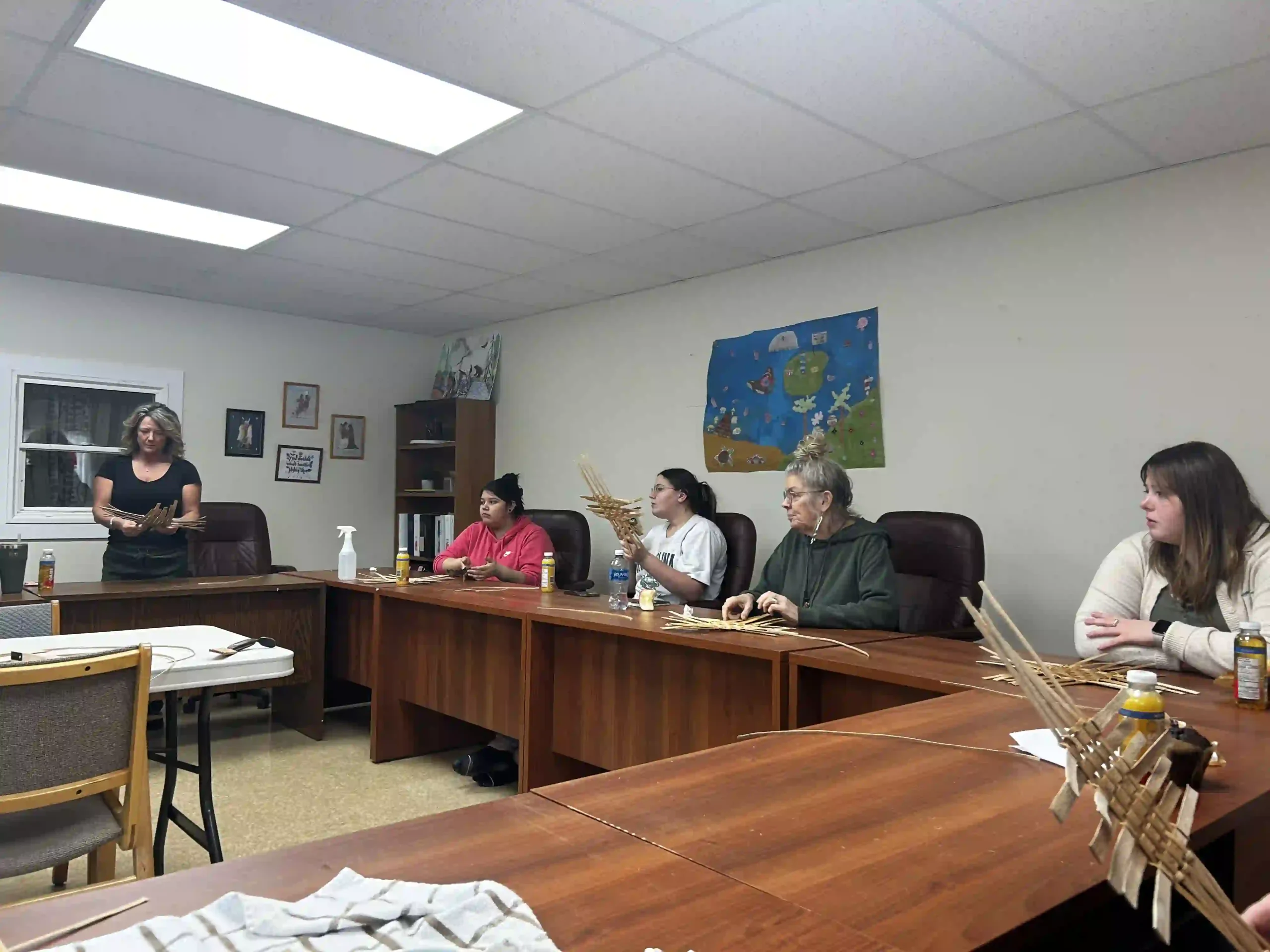
Reflections from the community basket-making workshop at NBICC (February 12, 2026)
On February 12, 2026, we gathered at the New Brunswick Indigenous Career College (NBICC), a place dedicated to training, professional development, and community support. What brought us together that day was something older than any classroom: the living practice of basket making, guided by Rodney Bear, an Indigenous knowledge keeper and basket weaver from Tobique First Nation.
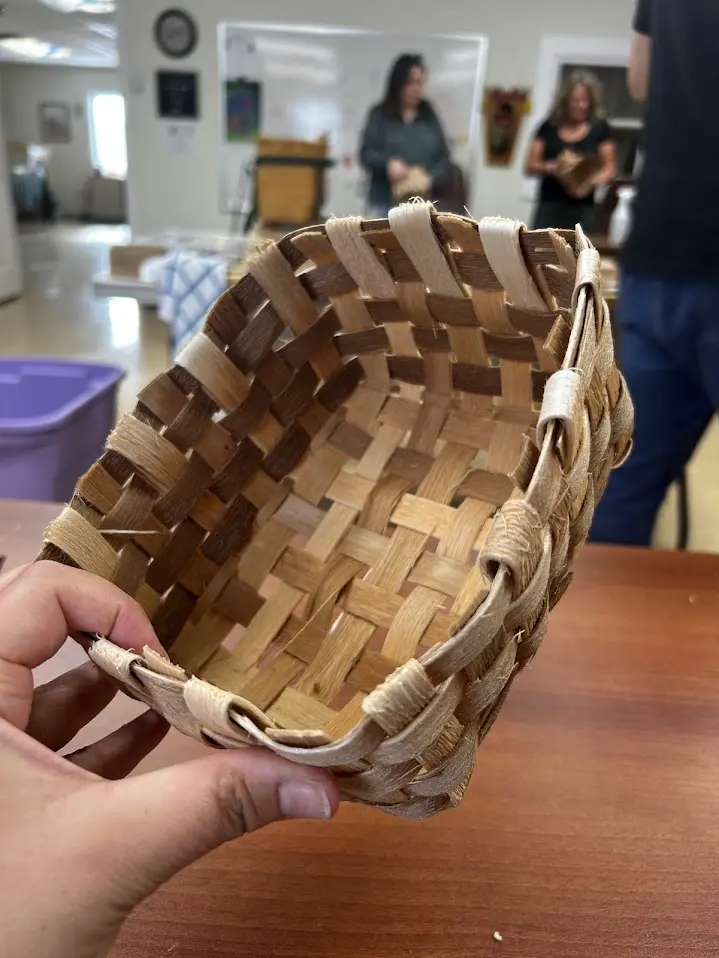
The room held a beautiful mix of people, students, teachers, and professional educators, each of us arriving with curiosity, a little nervousness, and the same quiet hope: I want to make something real with my hands. I want it to be good. Rodney called what we were making a blueberry basket, and he described it with the kind of excitement that makes everyone lean in. The energy in the room shifted quickly from “watching” to “joining.” It didn’t take long before laughter, questions, and the soft rhythm of weaving filled every corner.
And yes, there was a shared dream in the air: that the final basket would be strong enough and beautiful enough to one day hold a wild blueberry harvest, gathered in the right season, from the right place, with respect.
More than weaving: a lesson in effort, humility, and pride
This workshop was not only about learning how to weave. It was about learning what it costs, in time, in strength, and in patience, to create something meaningful.
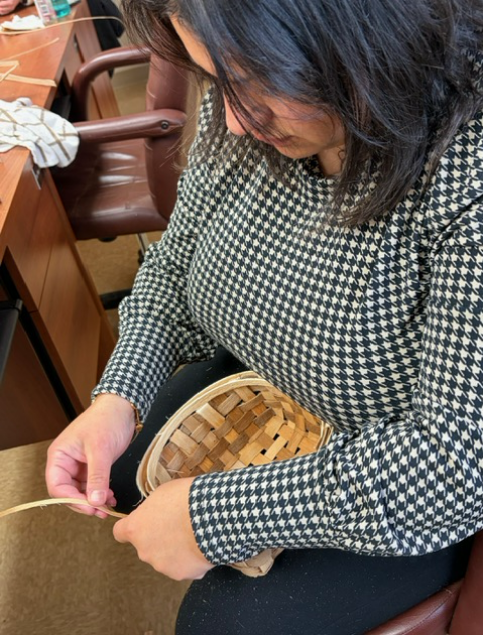
At one point, the physical reality of the work became impossible to ignore. We weren’t only “moving hands.” We were building tension, shaping structure, aligning strips, correcting mistakes, and trying again. Someone joked it was a full ab workout, and honestly… it was. I still remember watching Samantha push through the effort of keeping her loops straight and steady while following Rodney’s instructions. There were moments that looked like hopelessness, his will never turn into a basket, followed by sudden moments of pride when the shape finally began to emerge.
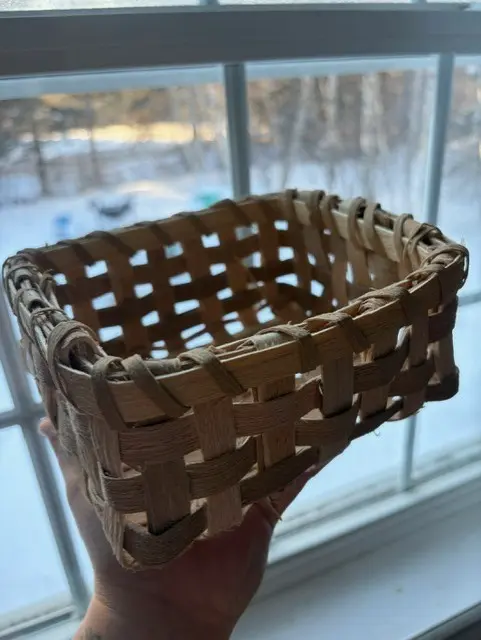
By the end, when each participant held a finished basket, we didn’t just see the product. We saw the work behind it. We saw the persistence. We saw the learning.
Rodney’s frustration and why it matters to all of us
Before walking us step-by-step through the weaving, Rodney shared something heavier: the reality of harvesting and preparing black ash and how difficult it has become.
Black ash is deeply tied to Indigenous basket making in many communities, and it is also a wetland-associated tree that supports broader forest and wetland ecosystems. But today it faces compounding threats, especially from the invasive emerald ash borer (EAB) and shifting environmental conditions linked to climate change.
EAB is present in New Brunswick (with detections reported in places including Edmundston, Oromocto, Moncton, and Fredericton in recent years), and once infestations establish, ash mortality can be extremely high. Researchers and agencies consistently describe EAB as a major threat to ash species across North America, including black ash.
Rodney explained that it is becoming harder to find stands of black ash suitable for larger baskets. Even when trees are present, stress can affect how they grow making them shorter, branchier, and less useful for basket material. His frustration wasn’t only ecological; it was also economic. He described traveling long distances across the province to find harvestable ash an expensive, exhausting reality that can sometimes cost more than what basket sales can realistically cover.
He shared a story across generations, how, decades ago, basket making could help feed a family in a way that felt sustainable. Now, the cost of harvesting and preparing material can be enormous, and the question becomes painful and practical at the same time: How much should a basket cost if the true cost of materials and labor is finally counted? And who can afford that?
This isn’t only Rodney’s dilemma. It’s a community dilemma. It’s a societal dilemma.
The social challenge: language, knowledge, and the risk of loss
Rodney also spoke about the fear that younger generations may be pulled away from learning basket making, not because they don’t care, but because the wider economy often fails to value the craft in a way that supports a livelihood. This challenge shows up in many places where cultural practices depend on threatened natural materials.
He raised another urgent point: language. Basket making has its own vocabulary, terms that live best in the language that shaped the practice. When fluent speakers are lost, the knowledge can become harder to pass on with its full meaning intact.
Hearing this changed how we looked at the basket in our hands. Suddenly, it wasn’t “just a craft.” It was a symbol of cultural continuity, held together by ecology, community, language, and time.
“Is there one way to make a basket?”
We asked Rodney if there is one correct way to make a basket. He said no.
Each basket maker develops their own method and style so much so that you can often recognize the maker by the “signature” of their weave. He also explained that basket types vary: some are made for harvesting wild foods and medicines, some for carrying equipment, and some are finer, gifted on special occasions, shaped by purpose, size, and the thickness of the splints.
That idea stayed with me: a basket is not only a container…it’s an identity, a purpose, and a story you can hold.
The weaving steps we learned
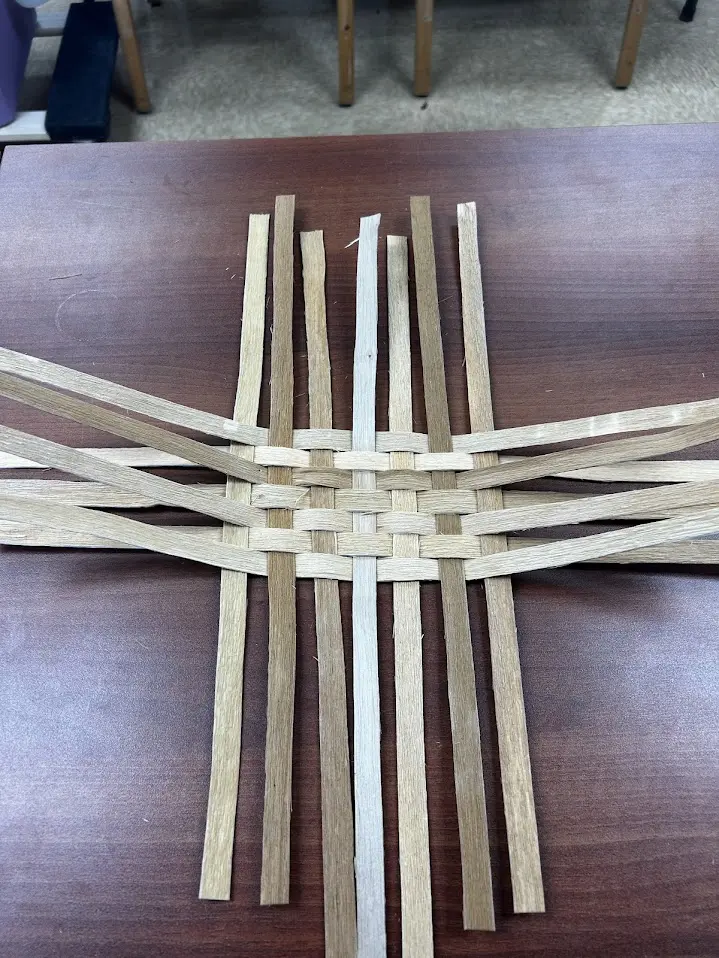
Step 1: Build the base
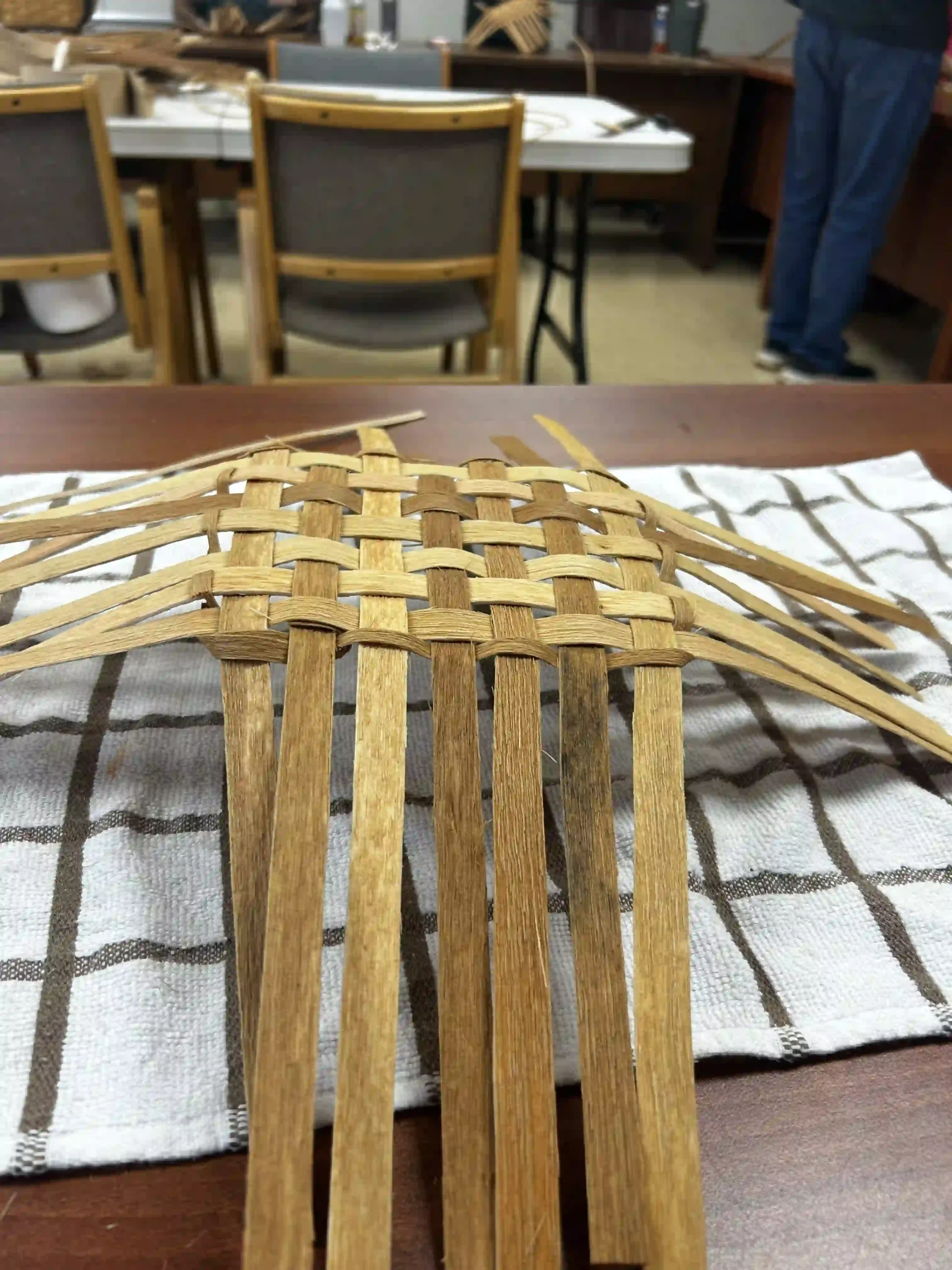
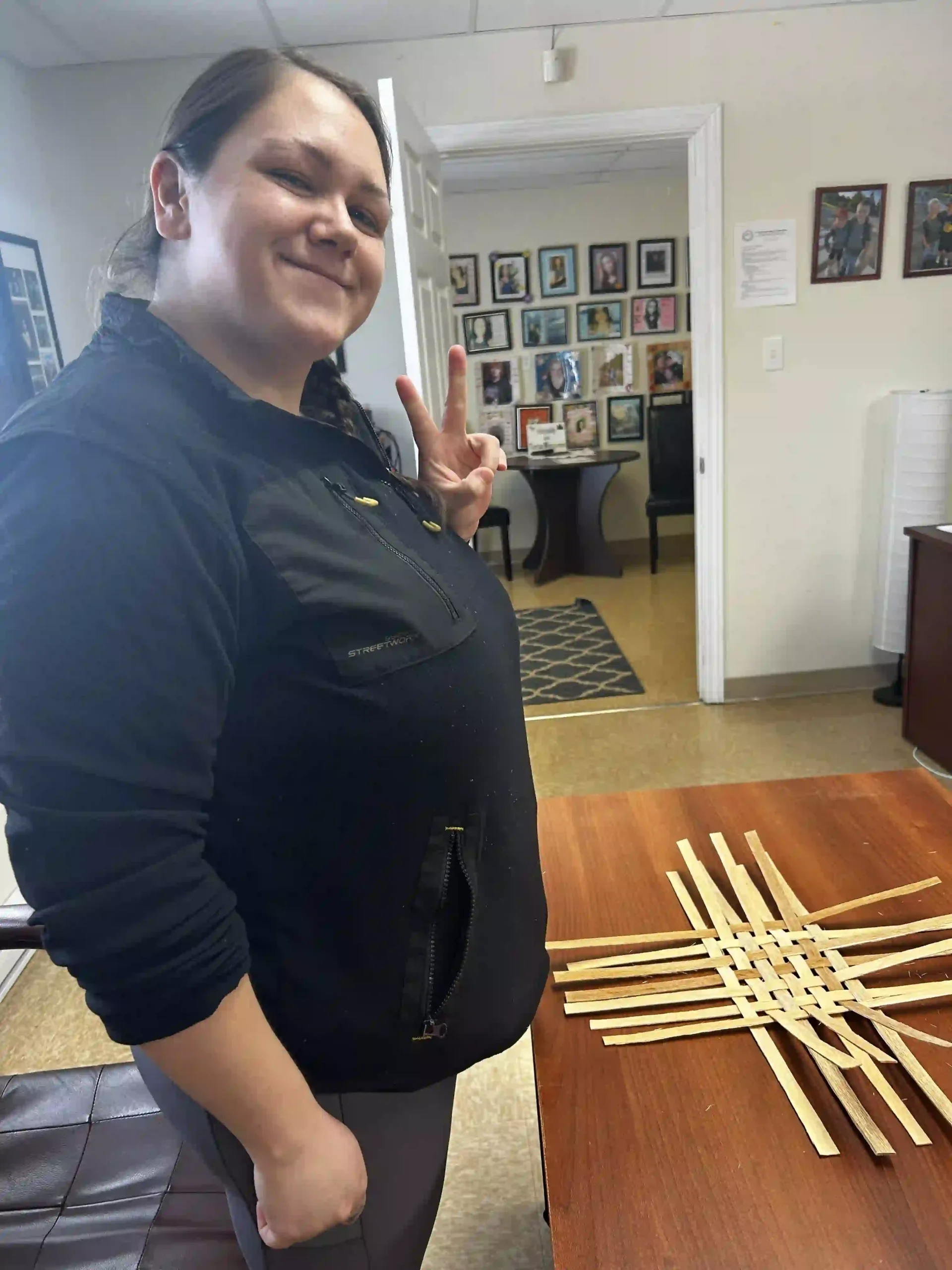
Rodney handed each of us 14 strips…our “standards,” the ribs that create the base and rise into the sides.
- Lay 7 strips vertically, side by side, with a small space between them.
- Take the other 7 strips and weave them over-under through the first set to form a tight, balanced base.
Step 2: Lock the bottom
Next, Rodney gave us a thinner strip…our locker.
- We wove the locker around the perimeter of the base to secure (lock) the bottom, creating the stable foundation needed to start building the sides.
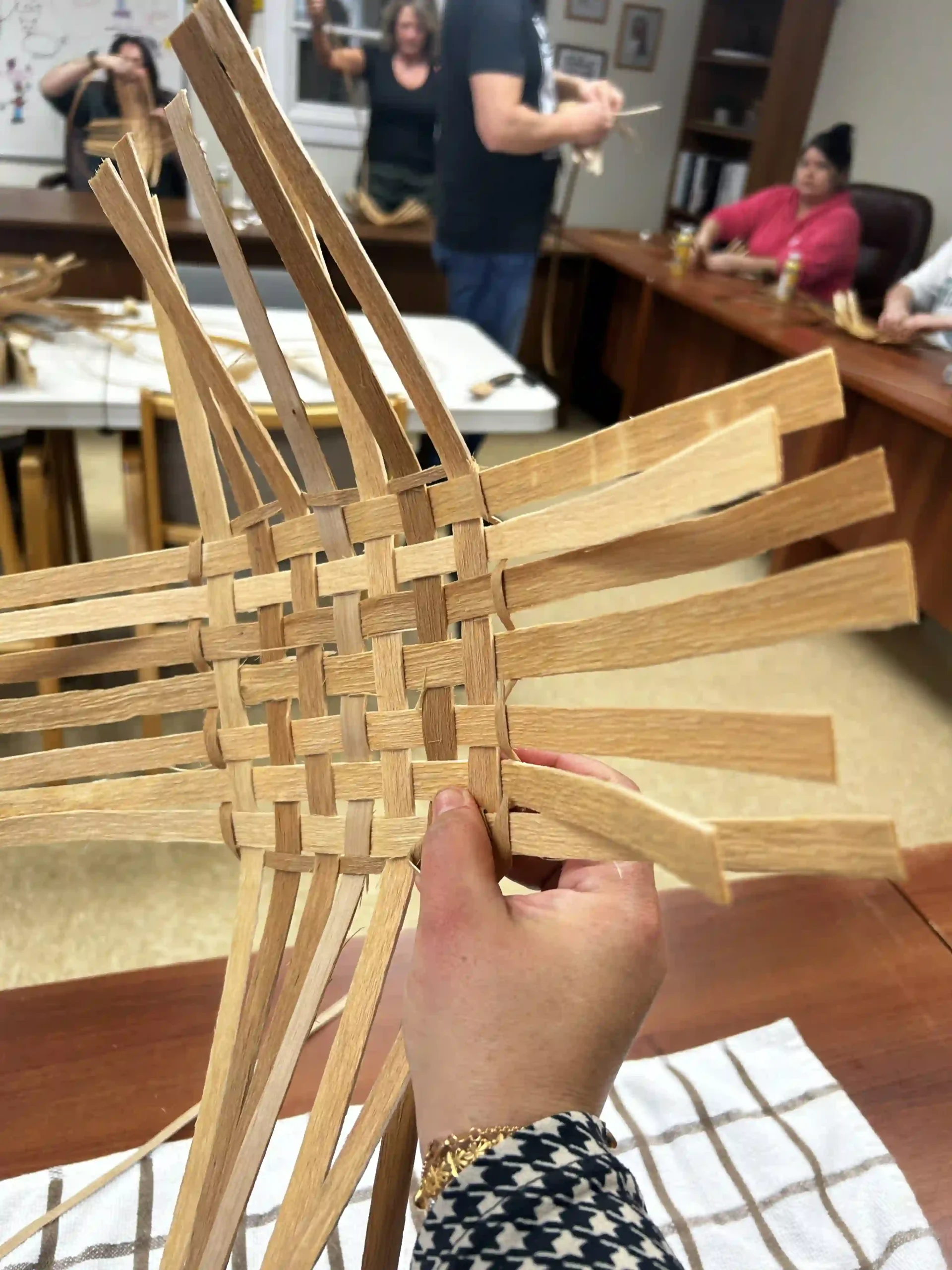
Step 3: Build the sides
Using the weavers, we continued around and around the base, gradually forming height.
- We kept weaving until we reached a point where about 3 inches of the standards remained, space needed for the folding finish.
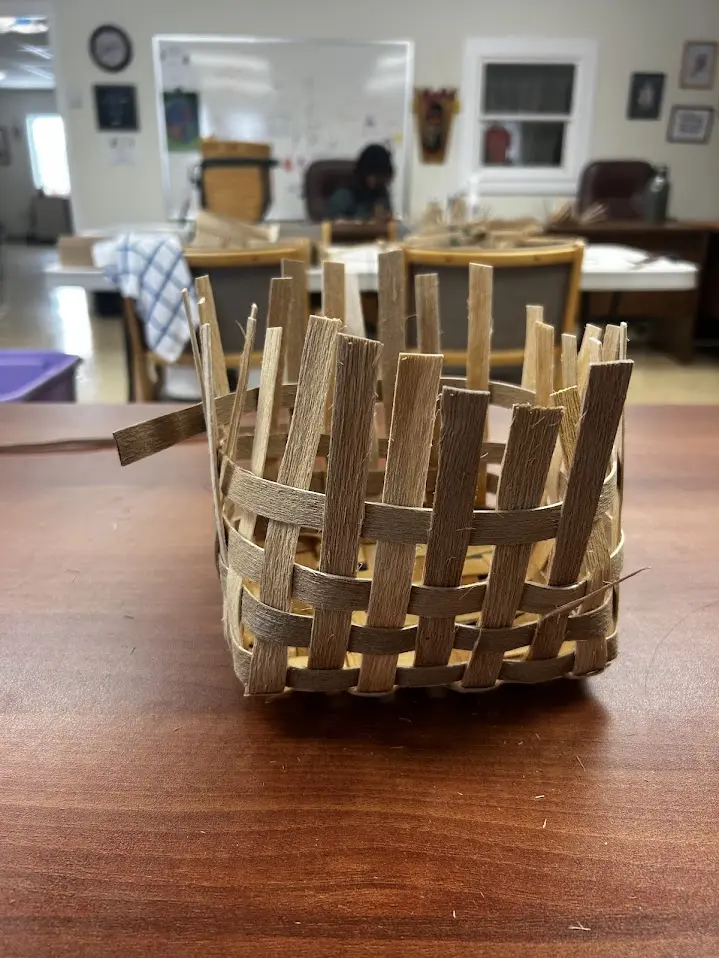
Step 4: Fold and trim
This was the part where the basket suddenly looked like a basket.
- We folded the outer standards over.
- We trimmed/cut the inner standards in a way that allowed the structure to tighten neatly.
Step 5: Add the rim
This was the part where the basket suddenly looked like a basket.
- We folded the outer standards over.
- We trimmed/cut the inner standards in a way that allowed the structure to tighten neatly.
The “small” tips that turned out to be everything
Rodney shared practical lessons that felt like they applied to more than basket making:
- Keep the strips wet. Flexibility matters, wet material bends without cracking.
- Spacing is not a flaw. A little space between standards helps the basket vent and handle seasonal changes.
- Mistakes are part of the process. Many issues can be repaired once you learn the rhythm.
- Durability comes from care. These baskets can last a long time when they’re made and treated thoughtfully.
If the steps sound straightforward, I need to say this clearly: the work is hard. It demands attention, strength, and patience. But the pride at the end is real—because you earned it.
Leaving with more than a basket
When I think back on February 12, I remember joy, people encouraging each other, laughing at crooked lines, celebrating small wins. But I also remember the seriousness in Rodney’s voice when he spoke about black ash, EAB, and the economic pressure on tradition.
Black ash decline doesn’t only change forests; it can also disrupt relationships between people, place, and practice. And when a culturally important tree is threatened, what’s at risk includes knowledge systems and living heritage, not only wood.
So I left the workshop holding a basket, and also holding a responsibility:
to treat it as more than an object, and to support the people and ecosystems that make this tradition possible.
Because protecting black ash is not only a forestry issue.
It’s a culture issue.
It’s a community issue.
And it’s a future issue.
Want to collaborate or be part of our work?
USNN’s work is built through partnerships, shared learning, and people who care deeply about land, community, and conservation. If you’re an educator, researcher, community group, student, or organization looking to collaborate, team up, or explore ways to work together, we’d love to hear from you. We’re always open to co-developing programs, supporting land-based learning, contributing ecological expertise, and connecting youth and communities with meaningful conservation experiences.
Reach out via our contact page or email info@usnn.ca to start a conversation. Together, we can strengthen conservation efforts, support the next generation of land stewards, and care for the places that connect us.

Posted by:
Drew Praticante
Newsletter
Latest News