ECO IMPACT 2026 – Event Reflection
April 25, 2026
Written by Sama AlMaarofi, Founder & Executive Director, & Masah Douabul, USNN Youth Engagement Co-ordinator
Networking, learning, and stewardship insights gathered through NRCan-supported attendance
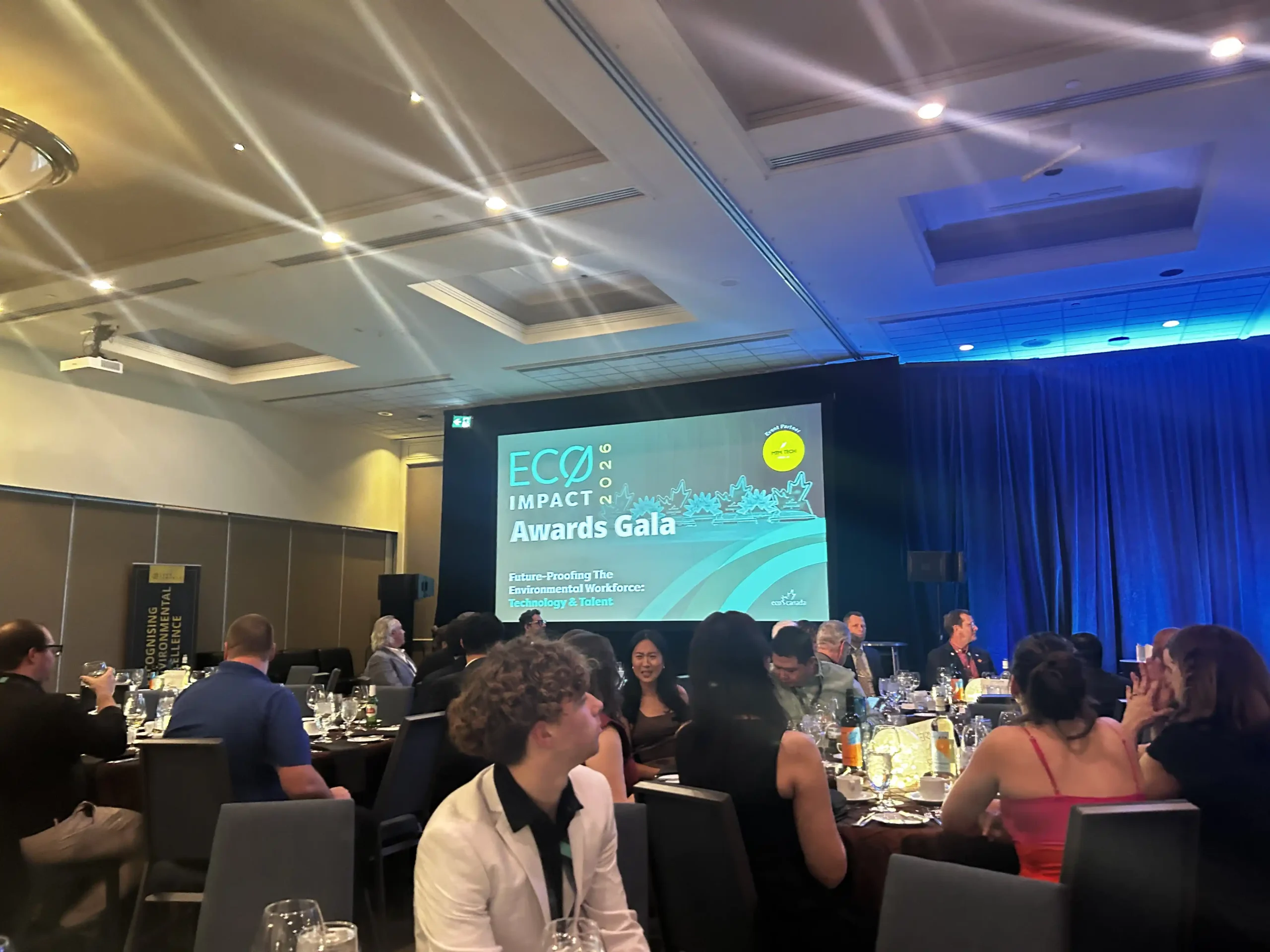
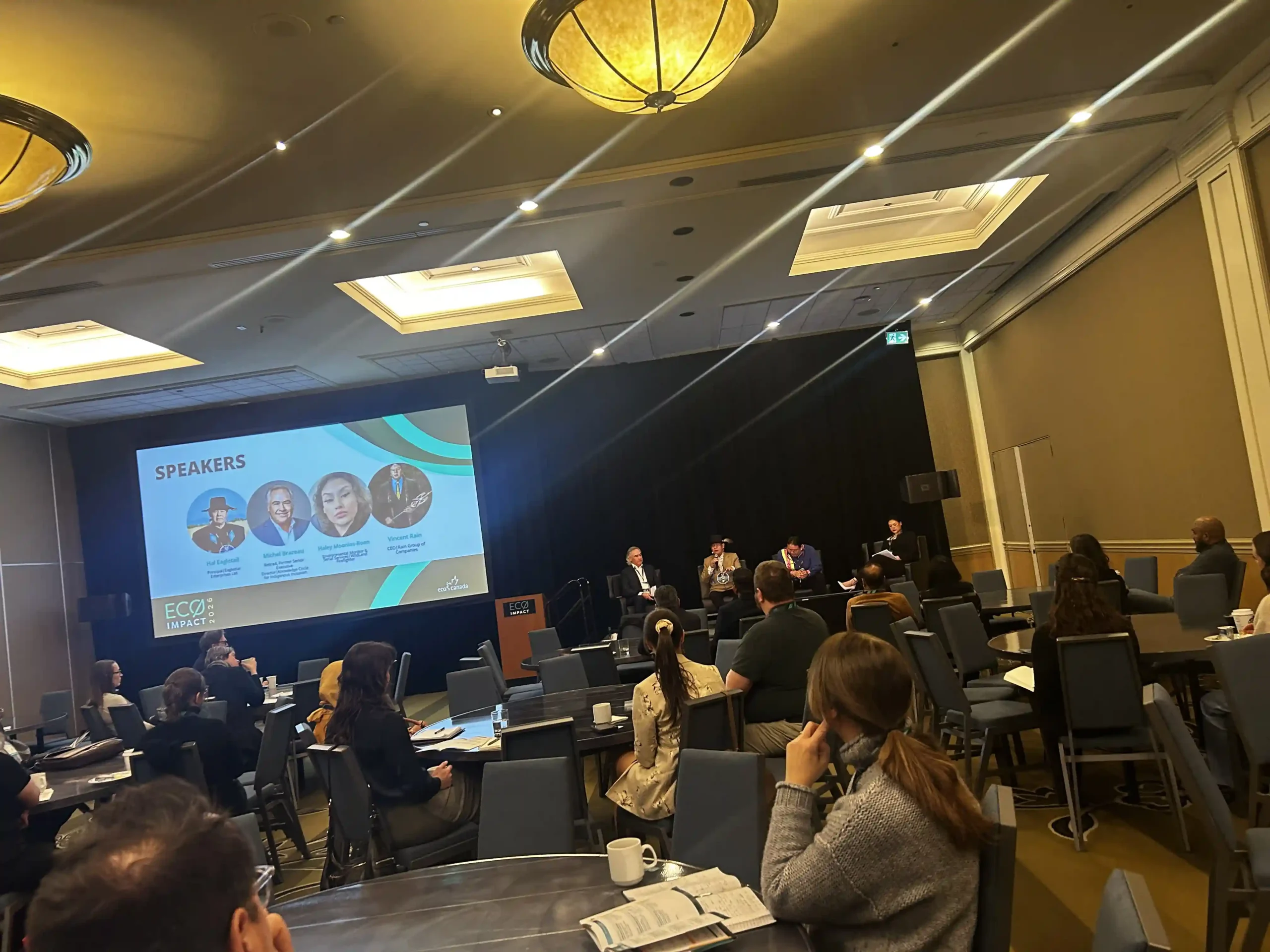
USNN attended ECO IMPACT 2026 with a practical and strategic purpose: to learn from the environmental sector where it is moving, to build relationships that can support future collaboration, and to gather ideas that can strengthen professional learning in clean and green energy across natural resource sectors. The event positioned itself as a national space where sustainability, innovation, and workforce development meet. For USNN, this made attendance especially valuable because it placed community-centered learning inside a wider conversation about the future of environmental work in Canada.
This reflection brings together two streams of experience: the structured notes captured through conference attendance and the lived reflection of observing the event through both a scientific and stewardship-oriented lens. Together, those perspectives reveal not only what happened during the conference, but what the event means for USNN as an organization seeking to expand knowledge, strengthen leadership, and support more grounded pathways into the green economy.
Central Reflection
The event was not simply about environmental careers. It was about transition: how the sector is changing, who is being invited into that future, what knowledge is being prioritized, and what responsibilities must remain at the center as innovation accelerates.
The Atmosphere of the Event
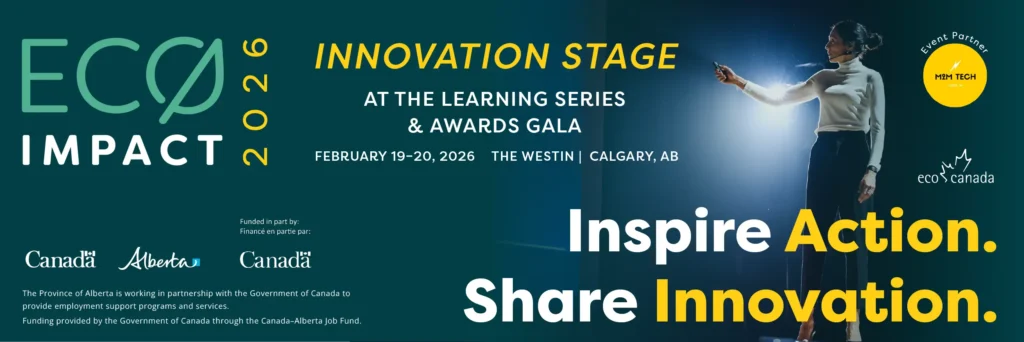
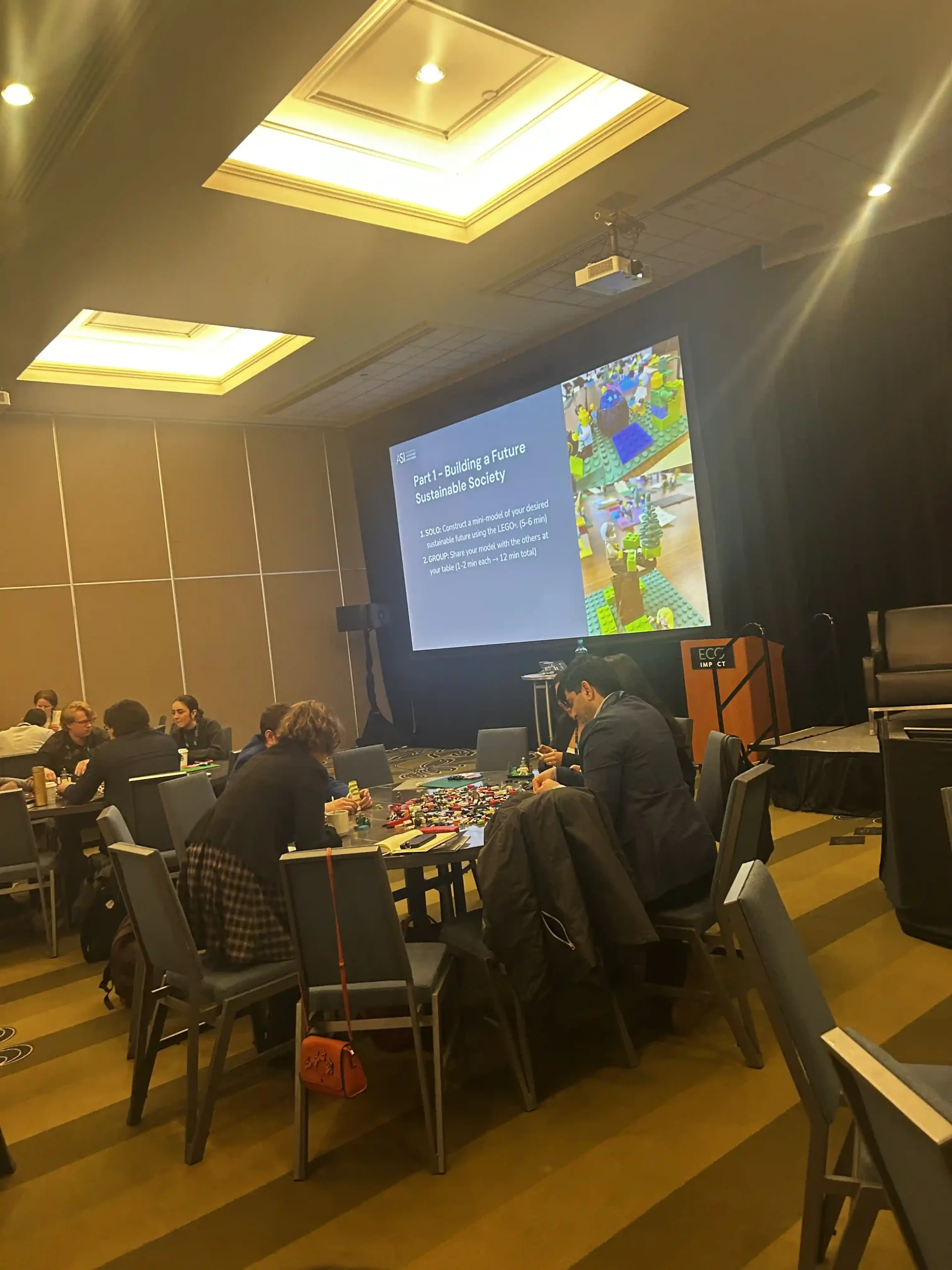
Across two days, ECO IMPACT created the feeling of a sector in motion. Panels, keynotes, showcases, and networking spaces all carried a common message: environmental work is no longer contained within one profession, one discipline, or one way of thinking. Clean energy, agriculture, education, technology, leadership, ESG accountability, workforce readiness, and public policy were all treated as part of one expanding conversation. The atmosphere was energetic, solutions-oriented, and forward-facing.
At the same time, the event did not feel abstract. The panel format gave many sessions the feeling of open problem solving. Speakers returned again and again to the real gaps, tensions, and needs facing the sector. Rather than presenting sustainability as a finished success story, the conference often framed it as a collective project still under construction. That honesty mattered. It gave the event a tone of urgency, but also a tone of invitation.
For USNN, this atmosphere reinforced the importance of being present in rooms where sector direction is actively being shaped. Conferences like this do more than share information; they reveal the language, priorities, and partnerships that increasingly influence how environmental knowledge is funded, taught, and applied.
Major Insights from the Sessions
Technology is accelerating the future of environmental work
One of the clearest impressions from the conference was the strong and repeated presence of artificial intelligence and other emerging technologies. Coming from a scientific perspective, this stood out immediately. The event was heavy with the belief that technological systems, especially AI, will play a growing role in empowering the future of developing energy sources, strengthening environmental monitoring, improving efficiency, and reshaping how organizations solve complex sustainability problems.
This did not appear only in one technical stream. It surfaced across multiple discussions, suggesting that AI is becoming part of the environmental profession’s mainstream imagination. That carries promise. It also raises deeper questions for USNN. If technology is becoming central to the next era of clean energy and natural resource work, then access to knowledge, ethical understanding, and critical literacy become just as important as access to the tools themselves.
The event made youth visible in ways that felt meaningful
Another powerful aspect of the event was the way students and young professionals were brought into the conversation. The opportunity for young people to present ideas, pitch technologies, and stand in front of an audience largely made up of industry professionals gave the event a different kind of energy. It did not position youth only as future beneficiaries of the sector. It positioned them as emerging contributors whose ideas deserve visibility now.
That matters deeply for USNN. When young people are welcomed into professional spaces with seriousness and respect, their participation shifts from passive observation to active belonging. The conference demonstrated that empowerment is not only about training youth for future jobs; it is also about allowing them to test their voice, share vision, and see themselves reflected in the environmental workforce before they are fully established within it.
The sector is still carrying a widening readiness gap
Yet alongside this optimism, the conference also exposed a growing disconnect. Many of the presentations reflected a high level of technological advancement and professional confidence. The older generation of practitioners appeared to be mastering innovation at a fast pace, while the next generation is still navigating much more basic questions: What field should I enter? What program should I take? What skills will matter most? Where do I belong in all of this?
This gap felt especially important. The event celebrated progress, but it also quietly revealed how much more guidance, mentorship, and systems-level support are needed if youth and emerging professionals are to move with confidence into a rapidly changing sector. For USNN, this points toward a concrete opportunity: building more intentional bridges between inspiration, education, and real pathways into clean and green energy learning.
Panels created a culture of shared challenge, not polished perfection
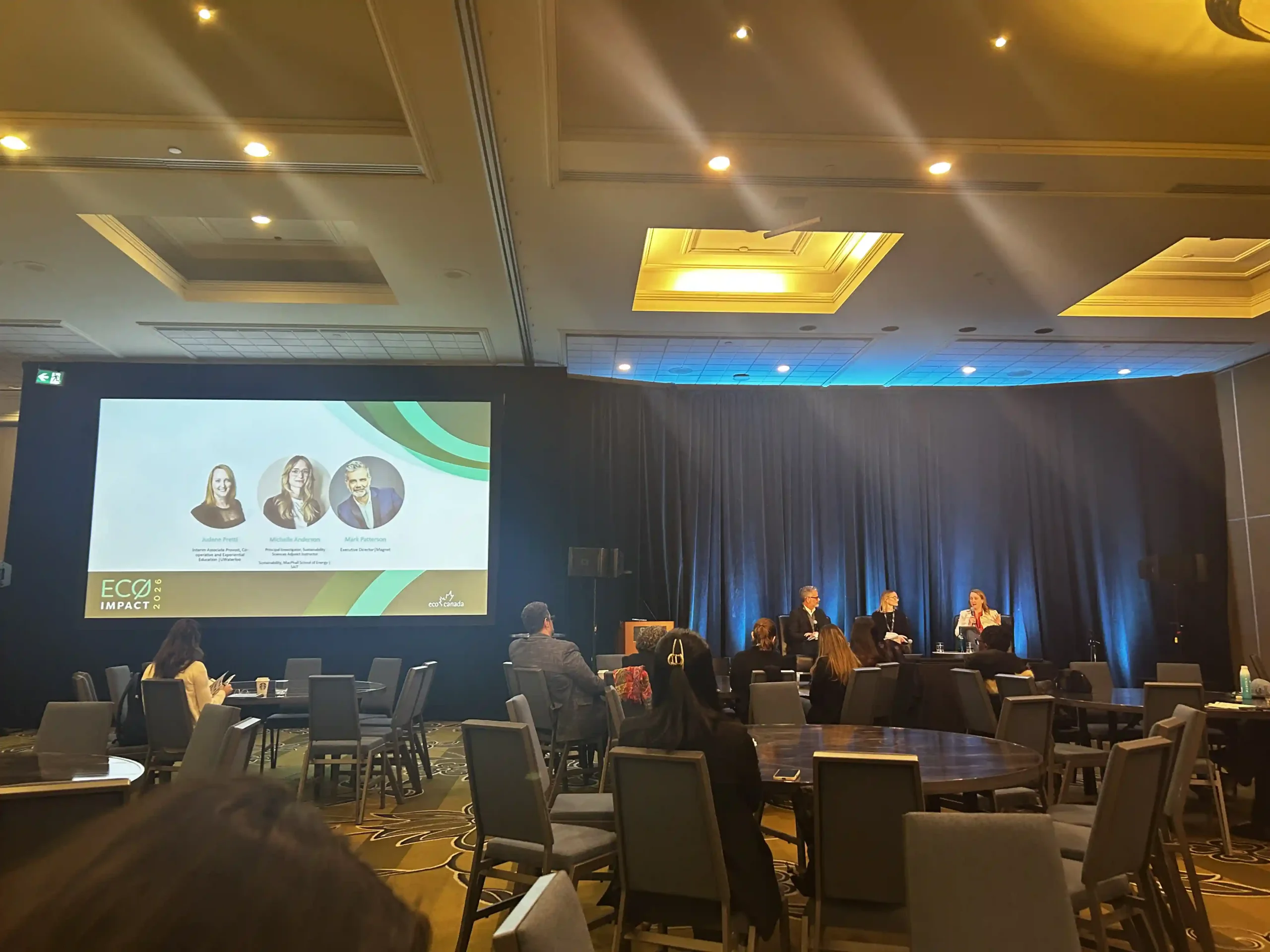
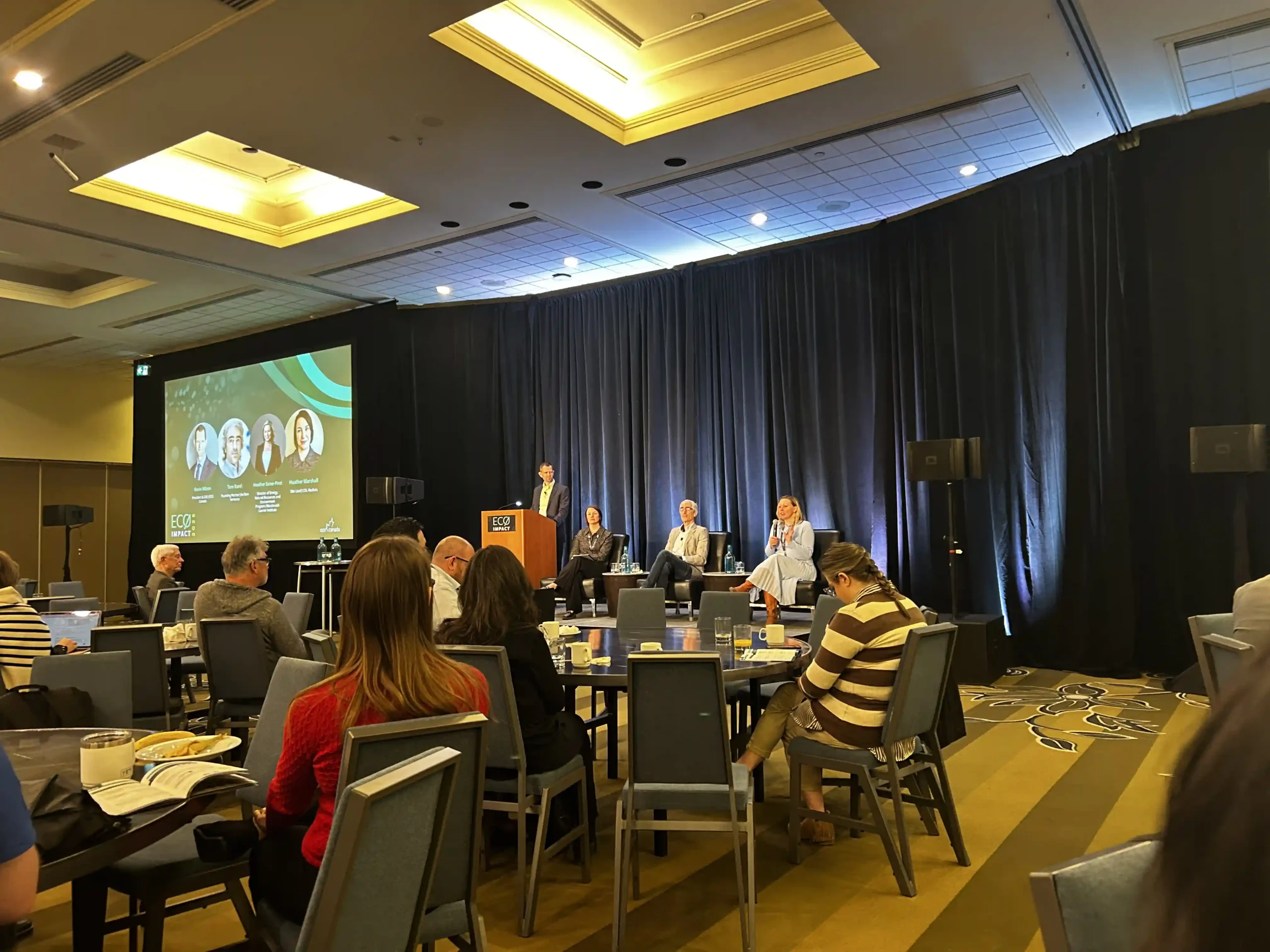
Most of the sessions were structured as panels, and that format shaped the experience in important ways. Rather than delivering only polished technical presentations, many speakers openly discussed barriers, gaps, and implementation challenges. The feeling in the room was not simply that people had arrived with the answers. It was that they were there to share what is difficult, what remains unresolved, and where collaboration is still needed.
This gave the event a problem-solving spirit that was especially useful for USNN. It showed that meaningful learning does not only come from hearing success stories. It also comes from witnessing how leaders name uncertainty, wrestle with complexity, and search for solutions in public. For an organization invested in stewardship and community learning, that kind of openness offers a stronger foundation than polished certainty alone.
The Indigenous session changed the pace and the meaning of the room
The Indigenous session stood apart in a way that was both emotional and intellectual. While much of the conference carried the momentum of speed, scale, optimization, and future-building, the Indigenous panel shifted the energy. It called people to slow down. It emphasized relationship to land, intergenerational knowledge, responsibility, and the need to listen to what nature requires rather than asking only how nature can be utilized.
This contrast was one of the most important experiences of the event. It was not a rejection of science or innovation. It was a reminder that environmental action without relationship can become extraction in a new language. The Indigenous perspective expanded the conference conversation by insisting that stewardship is not only a technical challenge to solve. It is a moral, cultural, and relational practice that asks who benefits, who decides, what is protected, and what future is being left behind.
What the Event Offered USNN
What USNN gained | Why it matters | What it points toward |
|---|---|---|
Stronger cross-sector awareness | The event showed that clean energy, education, policy, workforce development, and technology are now deeply connected | USNN can frame stewardship and green learning as integrated, not isolated, areas of work |
Direct exposure to innovation culture | Panels and showcases made visible how quickly AI, digital tools, and applied research are moving into environmental practice | USNN can help learners and communities enter this future with stronger context and confidence |
A clearer picture of the youth gap | Students and emerging professionals were invited in, yet the readiness gap between industry speed and learner preparedness remained visible | USNN can strengthen pathways, guidance, and place-based learning for future environmental leadership |
A grounding Indigenous lens | The Indigenous session reminded the room that sustainability is not only about innovation, but also relationship, consent, and responsibility to land | USNN can continue advancing a stewardship model rooted in both knowledge systems and community accountability |
Taken together, the event strengthened USNN in several ways. First, it broadened the organization’s understanding of how environmental professions are evolving. Second, it offered networking value by placing USNN in a space with educators, innovators, employers, and sector leaders whose work intersects with future program development. Third, it clarified where stewardship-based learning can speak powerfully into current sector needs, especially where innovation is moving quickly but social and cultural grounding is still uneven.
The conference also reaffirmed that green knowledge development cannot be approached only as technical content delivery. Learners need context, mentorship, values, and a sense of direction. Communities need tools, but they also need language that connects clean energy and natural resources to identity, responsibility, and collective wellbeing. This is where USNN’s voice remains especially important.
Reflection on Leadership, Mentorship, and Professional Growth
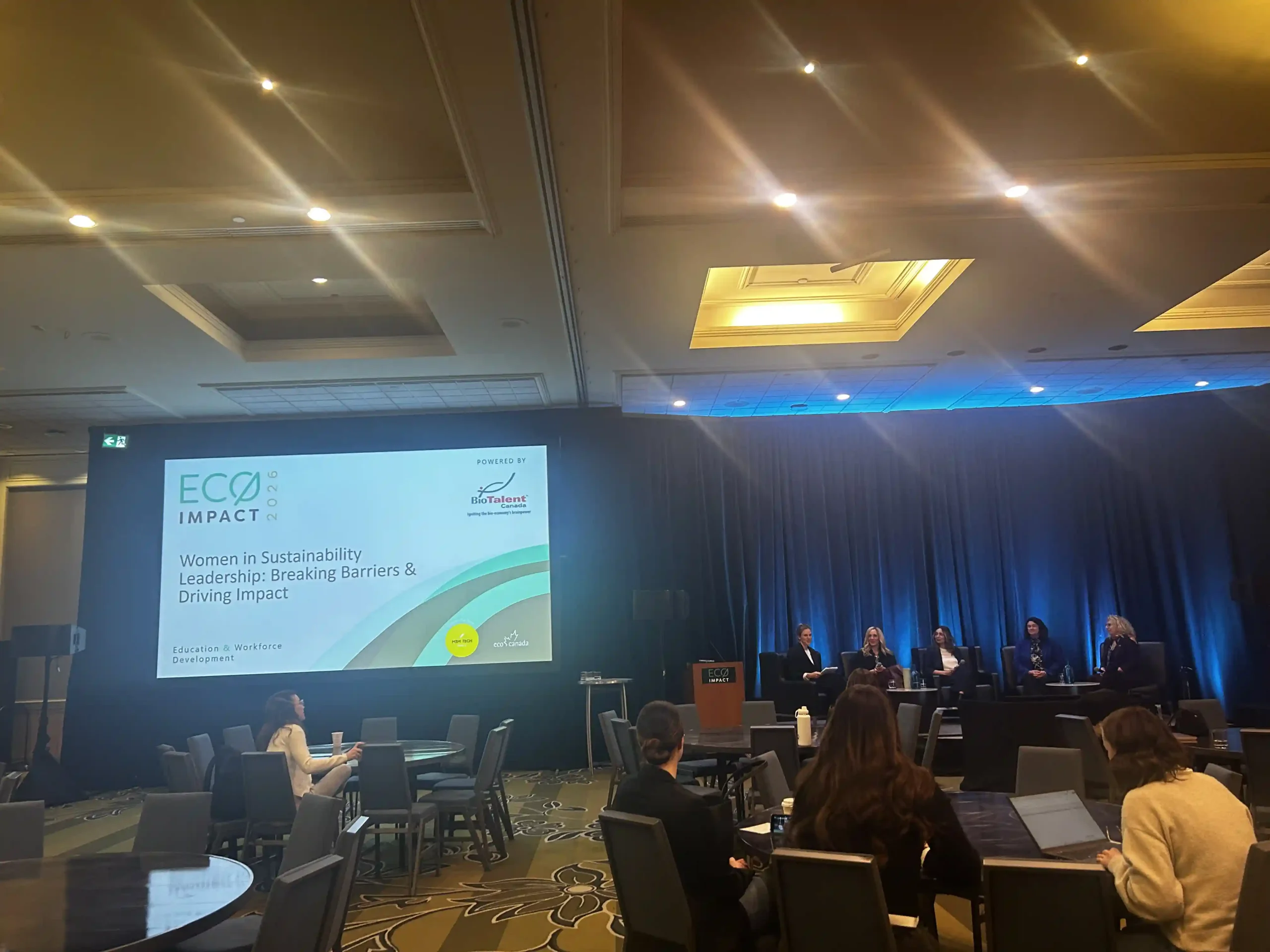
Sessions on women’s leadership, workforce development, and the future of education added an important human layer to the conference. They emphasized mentorship, sponsorship, action, and clarity rather than perfection. This mattered because the event did not frame environmental leadership as something reserved only for technical experts. It described leadership as something that also depends on communication, courage, adaptability, and the willingness to grow with others.
For USNN, these insights support a broader understanding of professional learning. Building future environmental leadership means helping people develop confidence alongside competence. It means creating pathways where learners can see themselves as capable contributors to clean energy, stewardship, and systems change even before they feel fully formed.
Closing Reflection: Science, Indigenous Knowledge, and the Promise of Two-Eyed Seeing
One of the deepest questions carried out of ECO IMPACT 2026 is why the science eye and the Indigenous eye still so often appear to stand apart, even when the language of Two-Eyed Seeing calls for them to move together. The conference made that difference visible. In many spaces, the scientific eye focused on innovation, scale, speed, measurement, and what can be built. The Indigenous eye focused on relationship, responsibility, memory, and what must be honoured before action moves ahead.
The problem is not that these perspectives are incompatible. The problem is that they are too often invited in under unequal terms. Science is frequently treated as the engine of decision-making, while Indigenous knowledge is asked to enter later as perspective, context, or consultation. That is not true Two-Eyed Seeing. Two-Eyed Seeing requires shared authority. It asks one eye to bring tools, evidence, and technical insight, while the other brings ethics, place-based knowledge, lived responsibility, and accountability to the land.
What ECO IMPACT 2026 showed is that the environmental sector still has work to do if it wants these ways of knowing to stand together with integrity. For USNN, this is not a reason for discouragement. It is a call to continue building spaces where knowledge systems are not in competition, and where stewardship is shaped by both innovation and wisdom. The strongest future is not the one that moves the fastest. It is the one that learns how to move forward without losing relationship.
Final takeaway for USNN
ECO IMPACT 2026 showed that the future of environmental leadership will depend on more than technology alone. It will depend on whether we can prepare people, honour land, build relationships, and allow scientific and Indigenous knowledge to shape one shared direction with equal respect.
Recommendations Emerging from the Event
- Continue positioning USNN in cross-sector environmental events where workforce, innovation, and stewardship conversations intersect.
- Strengthen youth-facing guidance and mentorship pathways that connect inspiration with real educational and career direction in clean and green energy fields.
- Advance programming that increases literacy around AI, emerging technology, and their ethical implications for environmental work.
- Keep Indigenous stewardship, land-based responsibility, and Two-Eyed Seeing at the center of future clean energy learning initiatives.
- Use insights from this event to inform future USNN professional learning resources, networking strategies, and stewardship development activities.
Looking Ahead for USNN
The value of attending ECO IMPACT 2026 will be strongest if its lessons are carried forward into action. For USNN, that means using this experience not only as a reflection on one successful event, but as a planning resource for future programming, partnerships, and stewardship leadership development. The conference made clear that the environmental sector is changing quickly. USNN is well positioned to respond by creating learning opportunities that are future-aware, relational, and grounded in community purpose.
Moving forward, the most meaningful response is not to imitate the conference, but to translate its lessons into forms that serve our communities well: mentorship pathways, practical learning resources, youth empowerment spaces, and clean energy education shaped by both technical knowledge and land-based responsibility. In that way, the experience of ECO IMPACT 2026 becomes more than attendance. It becomes part of USNN’s longer work of preparing people to lead with wisdom in a changing environmental future.
Want to collaborate or be part of our work?
USNN’s work is built through partnerships, shared learning, and people who care deeply about land, community, and conservation. If you’re an educator, researcher, community group, student, or organization looking to collaborate, team up, or explore ways to work together, we’d love to hear from you. We’re always open to co-developing programs, supporting land-based learning, contributing ecological expertise, and connecting youth and communities with meaningful conservation experiences.
Reach out via our contact page or email info@usnn.ca to start a conversation. Together, we can strengthen conservation efforts, support the next generation of land stewards, and care for the places that connect us.

Posted by:
Drew Praticante
Newsletter
Latest News
You might also like