From Reflection to Action: USNN’s Response to the Greening Our Education
October 31, 2025
Seeing Our Schools Through the Lens of Sustainability
This year’s Greening Our Education Survey 2025, released through the Sustainability Education Alliance (SEA), paints a revealing portrait of how New Brunswick’s schools and daycares are embracing sustainability. Across the province, 59 schools and 77 daycares opened their doors and shared how they are integrating sustainability into classrooms, playgrounds, and daily routines. The findings are both inspiring and humbling:
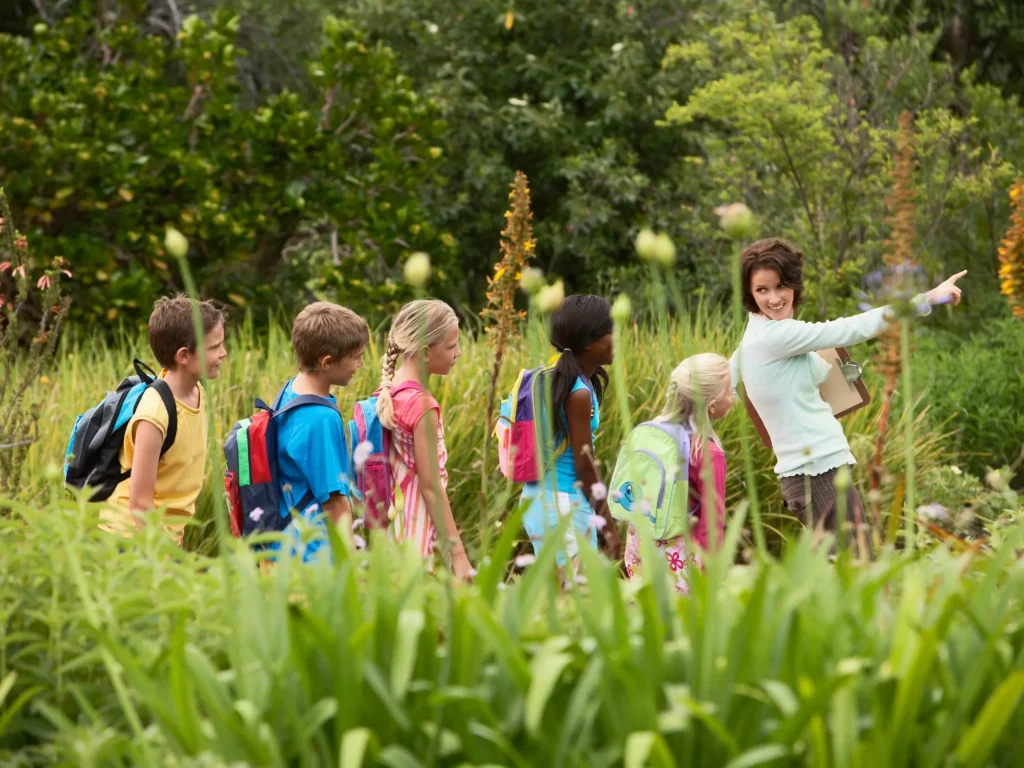
- More than half of schools (57%) and most daycares (72%) reported using outdoor learning frequently.
- Yet, only 34% of schools and 11% of daycares have ever engaged a Wabanaki Elder or Knowledge Keeper in their learning programs.
- While enthusiasm for environmental education is strong, many educators still lack access to curriculum-aligned resources, monitoring tools, and ongoing professional development.
For us at USNN, these results reaffirm what we see daily in our work with communities, youth, and educators a deep desire to connect learning to the land, but also a need for accessible, guided pathways to make that connection authentic, inclusive, and sustainable.
What the Report Tells Us
The Greening Our Education Survey 2025 offers more than statistics; it reveals where the heart of sustainability education beats strongest, and where it needs nurturing. It tells us that:
- Outdoor learning is flourishing in early years but fades in middle and high school.
- Indigenous knowledge integration remains largely symbolic rather than structural.
- Educators are eager to teach sustainability but lack time, funding, and confidence to lead complex environmental projects.
- Networks like SEA are vital, yet still need a centralized way to connect teachers, Elders, and environmental organizations across regions.
In short, the report challenges us to bridge the gap between interest and impact.
USNN’s Reflection: Braiding Knowledge for a Greener Future
At the United Spirit Nature Network, our mission has always been to weave together Indigenous knowledge, ecological science, and community empowerment. Through our programs, like Nature Through Our Senses, Function First: Wetland Stewardship Training, and the Black Ash Protection Initiative, we’ve learned that meaningful environmental education begins when learning is felt, seen, and shared.
The report’s call for stronger collaboration and Indigenous-led integration is exactly where USNN can contribute most. We see this as a moment to move from reflection to co-creation, to bring spirit and science into the same conversation.
What USNN Can Offer to Advance SEA’s Mission
- Land & Language Pods: Bringing Elders Back Into Classrooms
USNN will work with SEA partners to co-design recurring, Elder-led outdoor sessions for Grades 5–12. These pods will combine storytelling, language, and stewardship activities, ensuring that Indigenous knowledge is not an occasional guest but a guiding voice in the classroom. - Professional Development That Connects Curriculum and Culture
We plan to expand our Nature Through Our Senses educator workshops to include modules aligned with EECD curriculum outcomes and SEA’s Learning Nature’s Way initiative. Our goal is to empower teachers with confidence to teach sustainability through both scientific inquiry and cultural respect. - Eco-Monitoring Lite: Making Data Meaningful
Responding to the survey’s finding that 49% of schools lack environmental monitoring, USNN will introduce simple, accessible tracking tools—“Eco-Monitoring Lite”—to help schools measure their progress in reducing waste, conserving energy, and protecting natural spaces. - Compost Jumpstart for Daycares
Many daycares expressed interest but cited a lack of funding and infrastructure for composting. USNN aims to pilot a micro-grant and mentorship program to help early learning centers begin composting, gardening, and nature-based play with community support. - A Shared Provider Map
In partnership with NBEN and SEA, USNN supports the creation of a centralized, bilingual Sustainability Education Provider Map. This resource will help educators find trusted organizations, workshops, and funding opportunities—all in one place.
Working Together for the Next Chapter
The SEA report is a call to action, to move beyond good intentions and build living partnerships that connect classrooms with communities, and ideas with the land itself. USNN stands ready to collaborate with NBEN, SEA, and the Department of Education and Early Childhood Development to make these recommendations real. By blending Indigenous knowledge with environmental practice, we can ensure every child in New Brunswick grows up not just learning about the environment—but learning with it.
A Closing Reflection
When we teach a child to listen to the wind, to trace the veins of a leaf, or to greet the forest as kin, we are not teaching science or culture separately, we are teaching relationship. And in that relationship lies the heart of sustainability.
Together, through partnership and purpose, we can green not just our education, but our future.
United Spirit Nature Network (USNN)
🌎 Connecting Nature, Culture, and Community for a Sustainable Future
📧 info@usnn.ca | 🌐 www.usnn.ca
Want to collaborate or be part of our work?
USNN’s work is built through partnerships, shared learning, and people who care deeply about land, community, and conservation. If you’re an educator, researcher, community group, student, or organization looking to collaborate, team up, or explore ways to work together, we’d love to hear from you. We’re always open to co-developing programs, supporting land-based learning, contributing ecological expertise, and connecting youth and communities with meaningful conservation experiences.
Reach out via our contact page or email info@usnn.ca to start a conversation. Together, we can strengthen conservation efforts, support the next generation of land stewards, and care for the places that connect us.

Posted by:
Sama AlMaarofi
Newsletter
Latest News